

The Logistical Review:
This conference is well worth twice the $25 ticket price. In addition to meeting some of the greatest creators of our generation at the conference, there is the opportunity to learn something about the industry and network with people in it.
The panels were insightful about how to market oneself and one’s work, how to build your network, as well as key points to remember when you are the creator of any kind of storytelling. In the brief 30-minute panel hosted by Ty Templeton, @tytempleton, Beating Writers’ (or Artists’) Block, I heard exact ways, in clear and straightforward language, on how to get over writer’s block by remembering the seven basic story structures, tending to morals, and remembering how to set up an action that I’ve seen written out several times over in hundreds of pages across varied texts with less clarity. Howard Chaykin’s panel, The Page behind the Paradigm, gave reason as to how we structure a comic’s page and why it leads a reader to understand a story a particular way without having to tell them explicitly what is happening–something that fails to garner as much attention in much of the “how-to comic” media I see today.
Every panel had something to take away from that was worth every penny of the ticket price and minute of the travel.
C3 is a traveling conference with different panels and different hosts at each event. Most of the events are located in Long Beach California, but some do occur outside of CA. I highly recommend following their FaceBook page for the latest up-to-date information about what’s happening next and getting yourself a ticket if it’s happening near you.
—
The Gushing Attendee:
Almost everyone I met was already established in comics, either as a creator, editor, or teacher. The ability to meet them was priceless, as I was able to discuss with them a passion for comics, learn more about them and their professions, learn more about the industry as a whole, as well as establishing my interest in entering the professional side of this mostly self-taught niche within the publishing industry.
I went with a stack of business cards and handed out one to everyone I met, of which many have emailed me, or I’ve emailed them. Some I’m even pursuing projects with, which couldn’t have happened without the comfortable and friendly setting established by the event’s coordinators (Martha Donato, @MarthaDona, founder of C3, really deserves extra credit for this aspect).
The most exciting part for me was actually meeting Steven T. Seagle (@StevenTSeagle) because I love the Ben 10 series that he and the Man of Action team created. I remember when it came out in 2005–I was 11 years old, I was helping my mom cat sit for our neighbor who was out of town, and said-neighbor told me I could use his big screen TV to watch the premier if I wanted, which I did because those alien superhero promotional worked big-time on me. Years later, as a college junior, I was still a Ben 10 fan, bingeing Omniverse during that weird Arc 6 period when we had a new episode like every day for two weeks that drove my roommate up a wall as I played re-runs of the Ben 10 series on my laptop in the living room of our dorm… Yeah, still not sorry about that, Tami, but I will admit that I did go a bit overboard.
He took a bit of time after the event to talk with me and another editor and writer, Dane Styler (@danestyler), which was really cool. Both of them gave me solid advice about entering the industry that I greatly appreciate the time that they took to do so.
Again, 100% worth the ticket price when it comes to attending!
You can read the notes I took at the conference for yourself here.
#Awesome
4:15 PM – 1 – Quantum Storytelling, Hosted by Steven T. Seagle:
• “Quantum Storytelling” is best defined in this sense as breaking the elements of a story down into their fundamentals and building a narrative from there. The fundamentals of a visual story, such as comics, are: Panels, Visual Symbols, Textual Symbols (optional to some degree in comics), Color (black included), and Sequence.
• If you take a three-panel comic strip, no matter the arrangement of the panels, a story can be made. Our minds fill in the blanks and can reinterpret a narrative so long as the fundamentals are there. Even one or two-panel strips can create a story, such as the NY Times famous one-panel comics.
• Story is inevitable, malleable, and interpretable.
• Reminder: when creating a comic, keep these fundamentals in mind. You can guide the reader to certain interpretations by how you order your panels (such as geographical, chronological, etc.) and how you use visual/textual symbols and color.
4:45 PM – 2a – Breaking in and Staying in (the Comic Industry), Hosted by David Avallone:
• Many will tell you that it all comes down to hard work and passion, but it also takes being ready for an opportunity. When an opportunity comes, take it! For example, attending a local comic conference if you’re interested in getting into comics, talking about your passion with others and reaching out if they offer it, and finding ways on your own to start. With making comics, you can just make one. Go online and start publishing it–GET IT OUT THERE.
• Know your field: Always do your homework and do the work if you get some. If you want into an industry, begin researching that industry. Who are the big names? What are they’re projects? Etc.
• Networking: Remember that the people you’re meeting are people first. Make friends and look at them as potential friends rather than resources to promote yourself. Also, once you’re in–promote your friends!
• Be an active and engaged member of the community. This ties into the first point of this panel, getting out there. Look for volunteering opportunities, local conferences, etc. It will get your name out there in a positive light. Ex. The Hero Initiative (LINK) “creates a financial safety net for comic creators who may need emergency medical aid, financial support for essentials of life, and an avenue back into paying work.” People volunteer to help elderly comic creators in their area with sometimes basic needs like driving them to doctor’s appointments, picking up groceries, etc. It’s a nice thing to do, will give you an opportunity to learn from veterans in the industry, as well as get your name out there in the community. Volunteer today!
• Deadlines: DON’T be late, but if you have to be late, write back! Don’t leave your editor or publisher or artist or etc. waiting in the wings without a word. Not communicating is a great way to lose work.
• On starting your own comics: 1. “The future of this industry is new ideas” 2. When you start self-publishing a comic, start free and then work your way up to a charge after a few chapters. This will let people get a taste for your comic and help you note where you gain an audience and where you lose them.
• Remember: Nobody asked you to be a writer. You chose this. 🙂
• [Note from Peggy: A good article on this subject is “SIX TIPS FOR ASPIRING COMICS EDITORS!” by Nicole Boose.]
5:30 PM – 3a – The Page behind the Paradigm, Hosted by Howard Chaykin:
• One book Chaykin highly recommended several times in his panel was The Death of Expertise by Thomas Nichols.
• According to Chaykin, postwar there was a huge sweep in comics. Comics that were set for different ages were swept into a children’s section and what was often considered okay for adults or teens with violent acts of characters punching each other, displaying sexual interest, or other themes became seen as something being marketed to children when that was not necessarily the case (it just so happened that that’s who was buying). Parents who bought the works not knowing became outraged and the comic industry took a hit, causing an infantilizing age in comics that we’re now coming out of. In modern terms, think of the FTC/Youtube issue happening now and the predicted fallout. That’s what happened with comics.
• In the present, though we are getting the content back, we are losing the art of making a comic. The language/ the making of comics is important and the goal of this panel is to discuss the paradigm of the panel structure.
• Balance as opposed to symmetry: When making and placing panels, you are editorializing the language of your structure. Larger panels imply more importance, the order of panels dictates time and importance, when you have a pop or an inset you are defining its president in the current action–all things to consider. Think about why you are doing what you do. Great resource for what Chaykin discusses here is “Visual Language: Writing for Comic Books” by Anina Bennett.

• “The writer creates problems, and the artists solves them.”
• Harvey Kurtzman gave comics language by giving vocabulary to the rubble. Before, comics were basically four panels you read left to right in a backward Z.
• A page is usually broken down into four, horizontal levels. verticle is too thin, but gives height. Vertical pages are not often used, and when they do, it’s best to balance them with pops of something else.
• Every comic should have a subjective moment or view, preferably as an inset, in which the audience can identify with the character. For example, a close up on an expression to allow the audience to understand the emotions of the character.
• Artists need to read too–when you draw, you are editorializing the words written and giving them life. You are participating in the storytelling.
• Writers should remember to leave room for the art–let the readers read it!
• Every artist (and comics author) should remember the 5C’s of Cinematography (LINK).
• Networking: Write emails like letters–not texts. This is a business so try to be professional. Also, reach out to people you admire. Talk to artists, talk to writers, listen to what they have to say and try to learn from them.
6:15 PM – 4 – Beating Writers’ (of Artists!) Block, Hosted by Ty Templeton:
• Ever notice how most mythical creatures are just two or more things put together? That’s a great way to help you make up new mythic beasts. (Examples, LINK) [Note from Peggy: I missed the word Templeton called it and can’t find it but I believe it was Partmontoring.]
• Creativity is editing and autobiography.
• Create from one of the seven structures (The Quest, The Hero’s Journey, Romantic Comedy, Tragedy, Overcoming the Monster, Rags to Riches, Riches to Rags to Riches Again).
• The introduction of a character should be both memorable and telling. For example, when Batman is introduced in the dark knight comics, or even in the animated series, we first see the police proceeding his arrival, then batman above the police (standing on a car in the comic and on a rooftop in the animated series). Behind him flashes lightning. This introduces batman as two things, first that he is “above” the law (seen literally standing higher than police) and second that he is a force of nature (lightning behind him/on the same level).
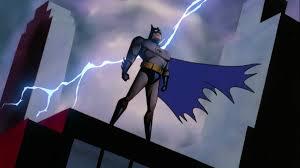
The snapshot comparison will be memorable.
• In comics, characters should always be in motion–either walking, or eating, or doing something. A flat, static, no-motion scene doesn’t work with storytelling.
• Remember that in a comic, you need to set up for action. If character A is going to hit character B with a broom, we should see that broom when we enter the room, we should be reminded of its presence in relationship to the two characters several times, see A grab it or reach for it, before actually hitting character B.
• Remember: comics are moving frames with frozen pictures, films are moving pictures with frozen frames–a story is told not just by the image in a comic, but by how it is framed within the page.
6:45 PM – 5 – Let’s Compare Notes, Hosted by Barbra Dillon:
• From panel 2b, “Building the Dream Team,” share the art and let fans be apart of it. [Note from Peggy: I did not attend this panel and no further notes at this time.]
• From panel 3b, “Entrepreneurs: Flexibility, Fears, Failures, and Fun,” Identify common interests when networking; don’t take advantage of people; ride the rollercoaster, not the merry-go-round. [Note from Peggy: I did not attend this panel and no further notes at this time.]
7:15 PM – 6 – Three Questions with Gerry Conway, Hosted by Conway:
• There are three important questions for every author to ask when establishing character: 1. Who is my character? 2. What does he/she/they want? 3. How will they get it? When you know the answers to these questions, it’s easy to plot a story out.
• An antagonist has a variation on the last question–instead of “How will he get it?” it is an un-surety on how exactly to gain what they want.
• In Batman comics, batman is almost an antagonist. It is the villains that know what they want and how they will get there and Batman who isn’t exactly sure how. But the deciding factor is that the protagonist moves the story forward.
• Good story develops from character.
—
C3 Website: http://comiccreatorcon.com/
Discover more from The Anime View
Subscribe to get the latest posts sent to your email.
