

By: Peggy Sue Wood | @pswediting
School is starting back up again, and I thought it would be fun to share with you all a short post about getting started in anime and manga studies. If you are not sure what you want to do in your academic field of study but have an interest in anime and manga, then you may want to consider integrating it into some of your work. You can talk with your professors about how to make this possible and–hopefully–find a bit of inspiration in this post for getting started.
What are Anime & Manga Studies?
Anime and manga studies refer to the academic field that focuses on the critical analysis of Japanese animation (anime) and comics (manga) as well as related topics such as the Japanese culture, history, and society. It is considered an an emerging field of interest to scholars in many different subjects and disciplines around the world.
Anime and manga studies as an academic field is a growing community that often provides commentary on new trends in publications and cultural interests that relates to the sequential art media form. In these studies, scholars examine various aspects of anime and manga, including their aesthetics, narrative structure, cultural significance, and social impact. They may also analyze how anime and manga reflect Japanese society, its values, and its global influence.
The field of anime and manga studies is interdisciplinary, drawing from fields such as film studies, literary studies, cultural studies, and anthropology. The interdisciplinary nature of this form of study has become increasingly popular in recent years, as anime and manga have gained a global audience and recognition for their artistic and cultural significance.
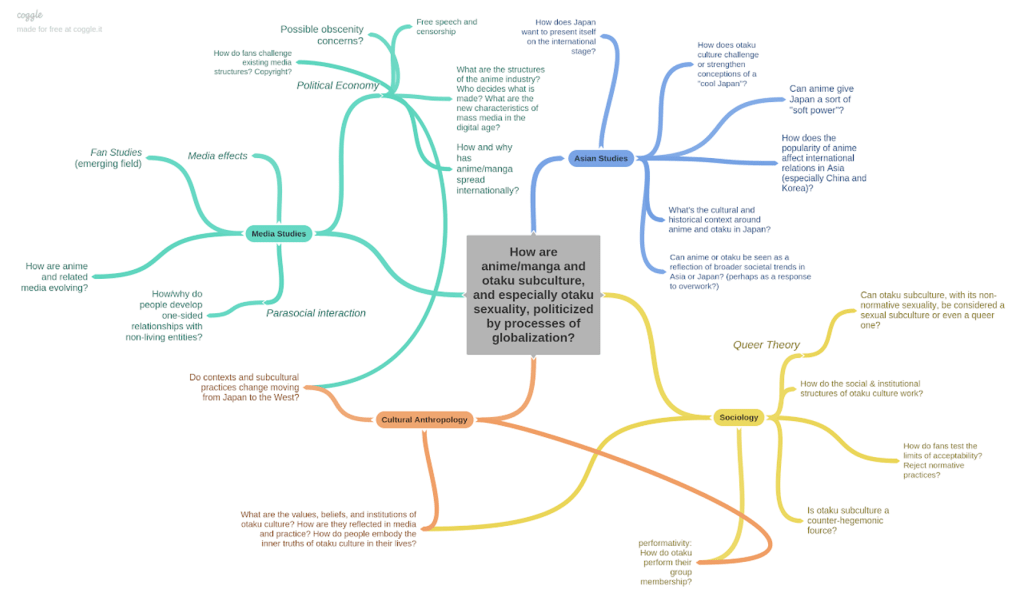
https://sites.google.com/umbc.edu/animemangastudies/degree-plan/concept-map
If you look at the graphic above, this ties four overlapping fields together for a singular study on otaku subculture within the anime and manga studies realm. This is not uncommon for any field of academia really, as many fields find academic overlap in other areas.
Some of the most typical places you can find anime/manga academics are:
- Asian Studies
- Media Studies
- Fan Studies
- Cultural Studies
- Literature Studies
Why study manga and anime?
Why people examine this particular media in an academic field varies from person to person. For example, I have a personal passion: an interest in the media and in storytelling; one of my colleagues has an interest in the developing anthropology of popular culture; one friend of mine enjoys examining marketing techniques. Reasons to enter are really endless, but if you have an interest in cultural notes or the humanities, media and particularly entertainment media like anime and manga are great places to find a starting point.
Rewards (and consequences) are as limited as other academic areas, as with most academic fields. You may gain recognition or financial backing if you become a professor or have influencer status with brand deals… but the rewards are more likely to include free attendance to conventions, some publishing opportunities, and better access to fans and public interest/support for your work.
Getting Started (Even Without A Degree)
To enter the academic field of anime and manga studies, you typically need to pursue higher education in relevant fields such as literature, film studies, cultural studies, or media studies. Some universities offer programs and courses in anime and manga studies, but many scholars in the field come from other disciplines by apply their knowledge to the study of anime and manga.
However, you do not necessarily need a degree to get started.
There are conferences and conventions you can attend or present at. Most anime conventions have the option of fan-panel submissions. You can pitch your panel ideas there! Typically, panels run through 30, 60, or 90-minute slots. So, prepare well!
There are also academic journals like Mechademia or The Journal of Anime and Manga Studies (JAMS) that you can submit academic papers to. There are also fan-related places to submit to (blogs, digital magazines, and such), like Anime Feminist and us at The Anime View.
Relating to this, you can also get started by simply building a presence either online or in-person, or both. Building a presence is one of the easier steps and involves engaging with the community. If you are already submitting to journals and cons, then you’ve begun! Other ways include going to local meet-ups/events and building a social media presence like blogging.
Again, there may be some times when you need a degree. For example, certain publishing or presenting opportunities. This is certainly not the case with all places, but some journals and conferences–especially if they are within a particular field like English or education–require those that submit work to either have a degree or be working on one. (Some even require a graduate-level degree.) Keep in mind where you plan to submit and what they require when deciding to share your work. Also, keep in mind that without a degree your work may not be prioritized.
Teaching in a classroom is also impeded by not having a degree. Though you can inform a class on a subject via a school project or as a guest speaker, teaching such materials in a classroom setting requires formal education.
Academia certainly has some ivy-tower parts to it, and this also exists in anime and manga studies. However, remember that as you get further along in academia, you may need a degree to do some things, but you definitely do not need one to get started!
You should never feel discouraged from entering academia. If one group is not a good fit for you, remember that the anime and manga fan community is huge and that there are lots of academic places to get started. Academic spaces for consideration include, but are not limited to:
- Schools (High School, College/University, Graduate School)
- Libraries
- Clubs
- Online Forums
- Conventions/Conferences
Also for consideration are the many different ways you can approach the medium for study in a less formal way, such as: analyzing the messages and themes, considering the creator’s intent, and how the media may be engaging an audience outside of its intended focus.
I’ll end here by writing that I hope this brief introduction to getting started in the field of anime and manga studies was informative and thank you all for your interest.
–
This post is very close to the script I have prepared for a short presentation on the subject. If you are interested, you can view the presentation slides here.
–
If you enjoyed this post, please consider buying us a coffee, leaving a comment, and/or subscribing to us below!
Copyedited by: Katherine Cañeba | @kcserinlee
Discover more from The Anime View
Subscribe to get the latest posts sent to your email.
