
By: Katherine Cañeba | @kcserinlee
TL/DR
This was a fun, friendly annual expo for the Los Angeles area that focuses on cosplay and art vendors. It benefits from its location in Little Tokyo for additional food and shopping options that helped make the event effortlessly feel bigger than it actually was. Great for families and first-time con-goers.
Location: Terasaki Budokan (Little Tokyo), 249 S Los Angeles St. | Los Angeles, CA 90012
Date: 21 October 2023
Size and Scale + Food Alley
This was a small convention that was manageable in size and had a good amount of potential activities for attendees. One could not attend every single thing happening, but one could window shop (or actually shop) at a leisurely pace through the Seller’s Hall twice and still have time to get food, chase after cosplayers for photos, attend a panel or two, or even leave the expo entirely for an hour or two and return later.
The venue, Terasaki Budokan, was small enough to navigate fairly easily with the help of a printed map and event schedule. Admission wristbands allowed attendees the freedom to enter and leave the venue as they pleased. This made it easy to go outside to the food trucks or elsewhere in walking distance around Little Tokyo. Also, it is a relatively new building, with clean bathrooms significantly contributing to my positive impression (other than a poorly installed door lock on the disabled stall in the Women’s bathroom).
I and other attendees ventured over to Kinokuniya Los Angeles two blocks away at some point in the afternoon to kill time between events and/or to shop around Weller Court when the art vendor options had been thoroughly explored.
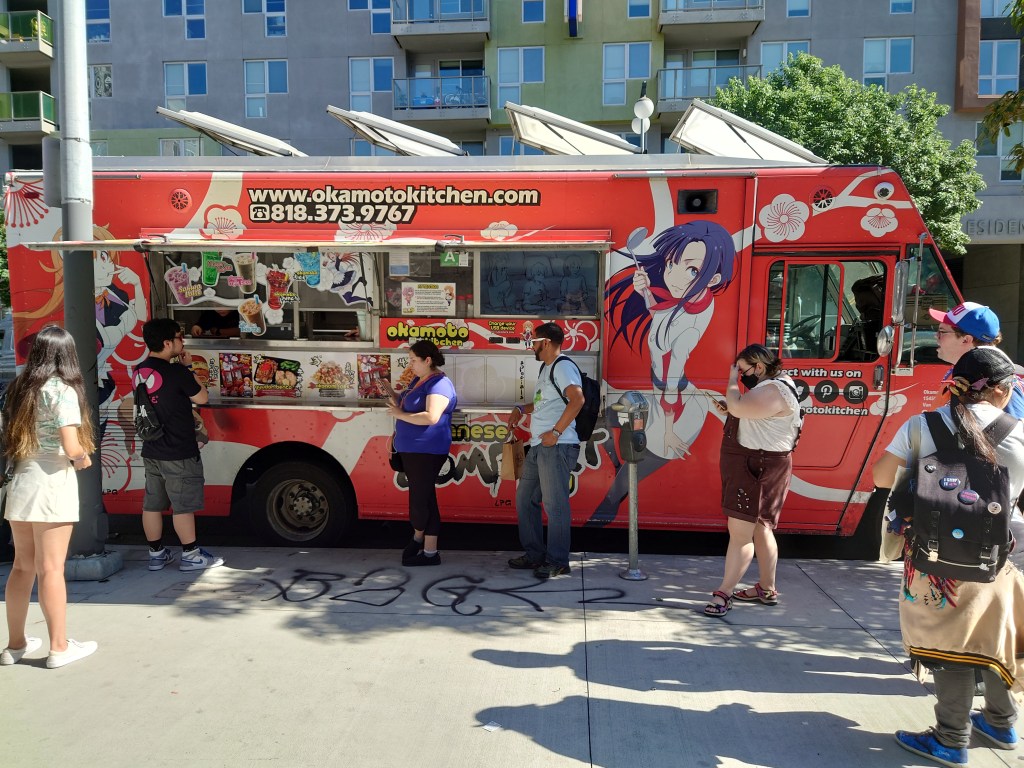
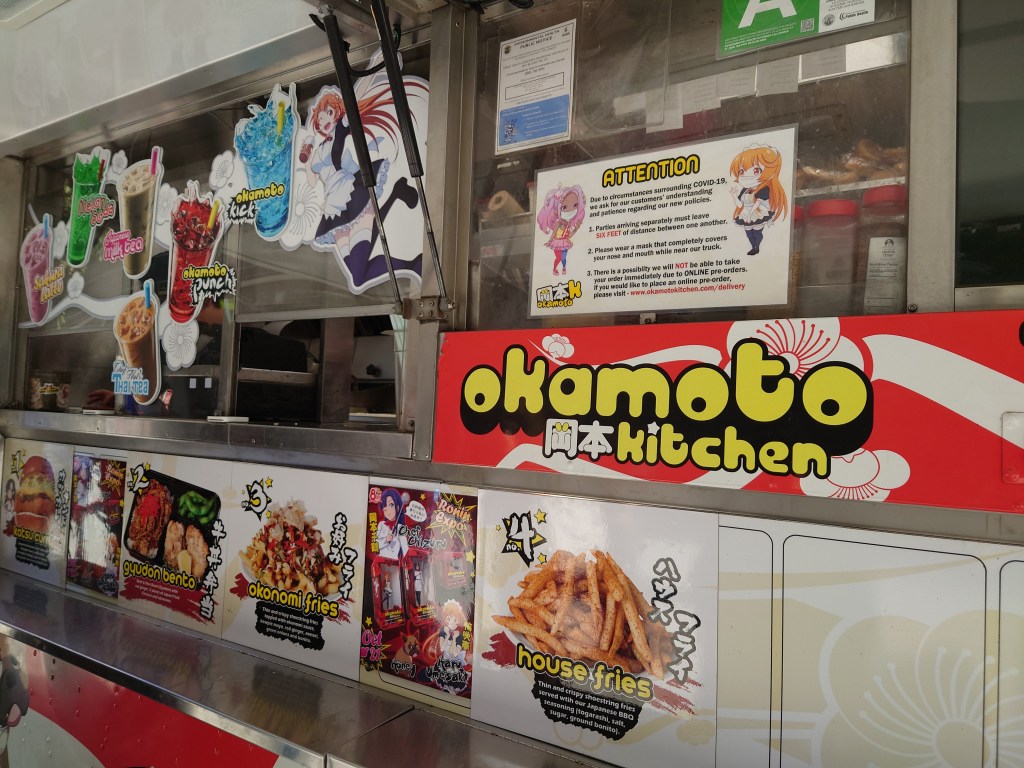
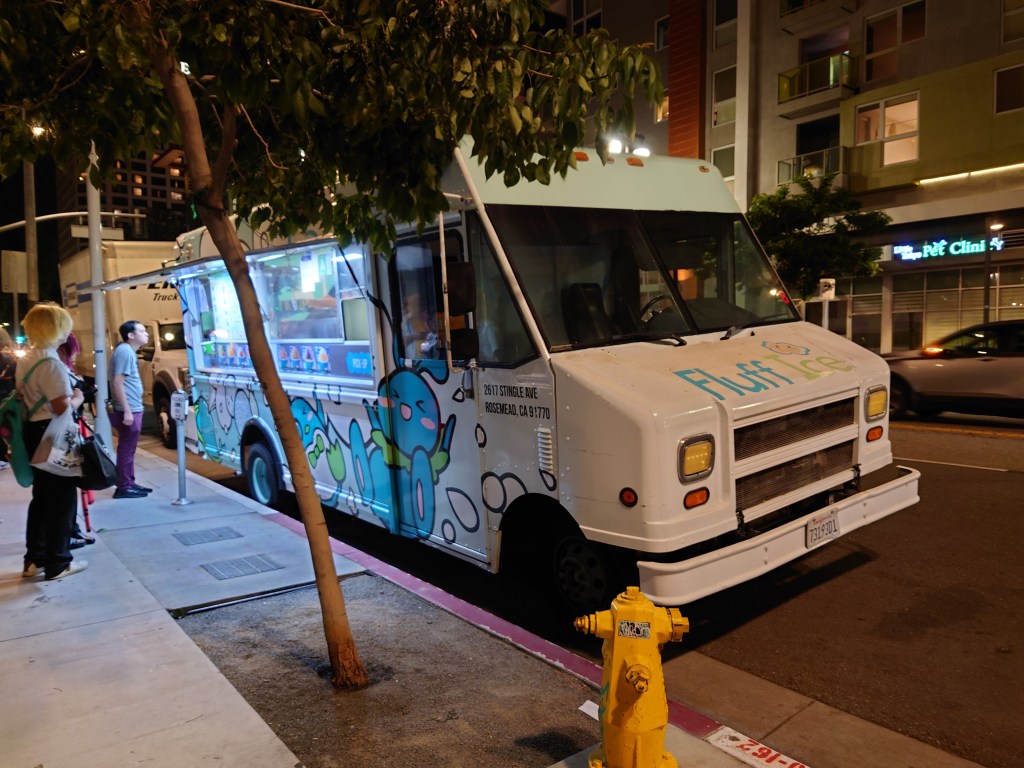
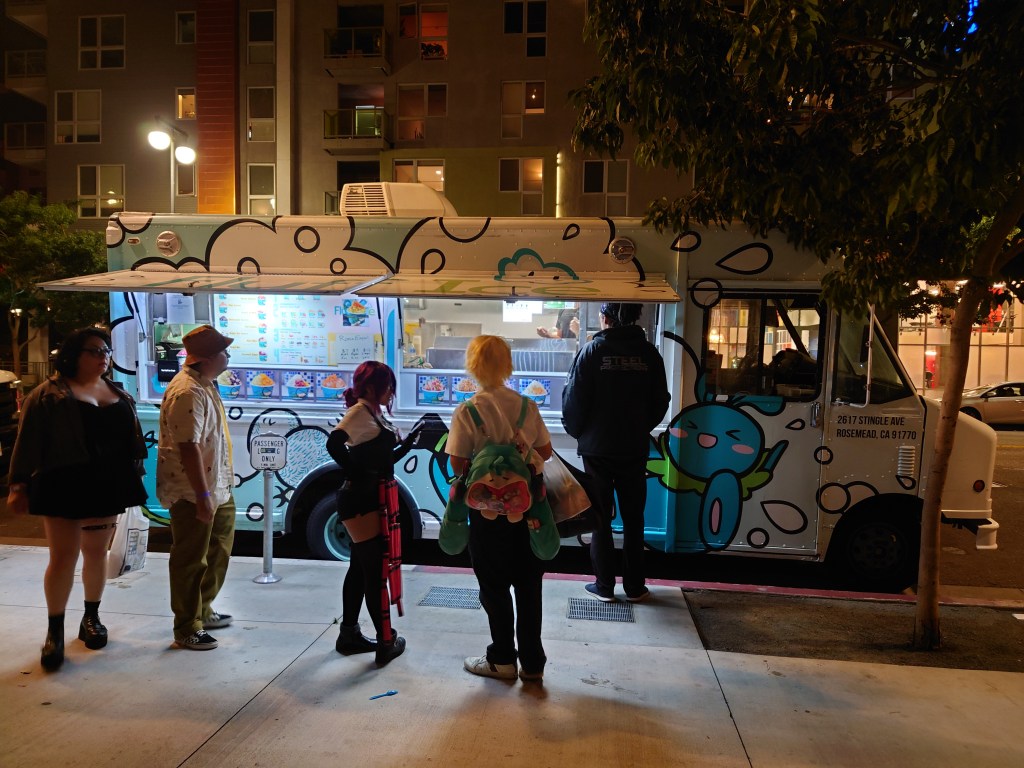
There were two food trucks for the event. Both parked on Los Angeles Street, the street outside the main entrance. The first was Okamoto Kitchen and the other was Fluff Ice.
Health and Safety Policy
https://www.ronin-expo.org/general-info
For ADA concerns, the whole Expo took place on the ground floor of the venue, with no stairs impeding the use of wheelchairs or walkers. The doorways to all sections of the venue were kept propped open, with the exception of the Panel Room, which one could easily knock on and be let in by the event staff or panelists.
Security was effective in that there was only one entrance (a metal gate opening onto the sidewalk), and there were between five and ten event staff at tables on either side of the entrance to greet people. They checked for event wristbands for those attempting to reenter the venue. There was a second exit in the Courtyard that one could use without issue. Custodians and other venue-affiliated staff were also visible throughout the day, keeping the spaces clean and orderly.
Regarding masks: in Southern California, COVID is still around, but people have generally moved on and ditched their masks since summer or even before that. Every now and then, I hear of someone I know who got COVID and thus disappears from public activities for up to two weeks, but there is little fuss made about it. Anyone can wear a mask in any given context if they so choose, and it is particularly encouraged to wear a mask if one is sick with some kind of respiratory illness. However, the majority of people do not wear a mask in public anymore, whether indoors or out. This was the same at Ronin Expo: a handful of people wore masks, but most people didn’t. Nobody seemed to be getting ragged on for wearing a mask or for not wearing a mask. Everyone was free to have fun in the way they felt was best for themselves.
Seller’s Hall
Artists were mostly in the Seller’s Hall, with a handful of vendors outdoors on either side of the entrance area after coming through the main gates. Part of the gymnasium used for the Seller’s Hall was specifically used as the Gamer Zone.
Vendors were all happy to chat, compliment us on our outfits, answer questions about their merch, or even give out freebies in the spirit of the event. (I never thought I’d see the day when I would just be handed a Pokémon trading card pack for free, but these guys were seriously that generous.) I saw very few Sold Out signs even by late evening, so inventory seemed sufficient.


Outside of the free stuff, there were a lot of cool items being sold, too. One that I thought was really interesting was an amigurumi Dobby (from Harry Potter). I have never seen one before and I may never see one again!

Cosplay Areas
The Courtyard was an admittedly cramped outdoor area with some greenery (some low-lying plants and a small tree) used as a cosplay photo zone, and it connected the singular Panel Room to the rest of the areas. I had some difficulty navigating around the other people milling about in this area without bumping into them, particularly with elaborately dressed cosplayers whose outfits could be destroyed by an accidental run-in with someone else. If empty, however, the Courtyard would have been a visual treat and a peaceful getaway spot to take in a bit of nature. I would recommend not lingering in this area for too long due to the crowding.
Entertainment – Attendee Experience
The Plaza Stage was outdoors with plenty of seating thanks to an added set of bleachers in addition to the concrete benches flanking the stage, built into the building exterior. Some notable stage events included panel discussions with English voice actors for Jujutsu Kaisen, BLEACH, and Dragon Ball Z. I enjoyed eating my lunch from the Okamoto Kitchen food truck while listening to the actors discuss details about the English VA subset of the entertainment industry.
I also attended two panels, both held in the Panel Room. They are:
Intro to Visual Kei and Fan Talk | 2:45-3:45 PM
I definitely feel as if I got schooled while attending this panel, as I had only a vague idea of what Visual Kei is before hearing the panelists’ take on it. For those that do not know, Visual Kei is a music scene and movement that originated in Japan during the late 1980s, influenced by glam rock and other 1980s rock music styles. The panelists shared some supremely entertaining photos and music videos of the most prominent Visual Kei artists, from their origins in the late 1970s to the present day, and their knowledge and passion shone through despite serious logistical issues with their presentation.
Something of note to me was that the panelists were rather harsh when mentioning YOSHIKI (from X Japan fame). They said that he claims to “take credit for everything” by stating that X Japan started Visual Kei in the early 1980s. According to the panelists, it was actually X Japan’s slightly older contemporary 44MAGNUM that first started the trend.
I appreciated what I learned from the panel, but given that I was fresh off the YOSHIKI Classical 10th Anniversary World Tour concert in Los Angeles the night before, I am admittedly a YOSHIKI fan who did not take too kindly to the panelists’ opinions. Perhaps 44MAGNUM walked so X Japan could run. But whether or not 44MAGNUM were the true founders of the Visual Kei fashion era, I believe that X Japan was still the band that contributed the most to popularizing it due to their own all-eclipsing popularity (in Japan and even internationally to an extent).
Unfortunately, the panelists encountered difficulties while attempting to display their PowerPoint presentation on the projector, which proved to be unresolved. As a result, we were directed to view their content directly from a laptop screen. These issues stemmed from Mac/PC incompatibility between the panelists’ laptops and the venue’s equipment. Although it was difficult to view and appreciate their content on such a small screen, the panelists managed to compensate for this inconvenience through their enthusiasm and deep knowledge of the subject matter. I especially enjoyed how their Visual Kei cosplay outfits and Sanrio Kuromi plushies on display helped enhance the atmosphere and felt like it completed the vibe. Given how well the presentation ended up at the end, I feel like it was unfortunate that a few audience members decided to depart during the early stages of the presentation, likely due to the ongoing efforts to resolve the technology-related setbacks.
A Hideo Kojima Fan Panel | 6:30-7:30 PM
This panel was also hosted at Anime Expo 2023, but I wasn’t able to attend it at the time. The panelists claimed to be practiced with it because this was their third time presenting the material, and it definitely showed. The panel was engaging and funny, and the panelists connected well with the audience. (I’d like to award extra points for the quiz with prizes at the end, too!)
While I have never personally played any Metal Gear games, I remembered casually watching my brothers play them while we were growing up and being struck by how much they got into a seemingly simple game. I ended up being very much a Japanese Role-Playing Games (JRPG) person throughout the PS1 and PS2 eras. I did feel a little strained to understand aspects of the presentation because I lack the foundational experience of Kojima’s most famous projects, but I appreciated the insight into Kojima’s creative process and his unique style that he has built into the many games he was involved in over the years. For example, imagine playing a game in which pausing the game even once results in getting the “bad ending” where the damsel in distress dies! Apparently, that’s Kojima. To learn more about this fascinating creative mind, the panelists recommended picking up Hideo Kojima’s autobiography The Creative Gene (perhaps from a Kinokuniya near you).
Final Judgments
Venue: 5/5
Staff: 5/5
Organization, Layout & Management: 4.5/5
Organization, Media Use: 4/5
Attendance: 4.5/5
Affordability: 5/5
Overall: 4.7/5
–
If you enjoyed this post, please consider buying us a coffee, leaving a comment, and/or subscribing to us below!
Copyedited by: Peggy Sue Wood | @pswediting
Discover more from The Anime View
Subscribe to get the latest posts sent to your email.
