
By: Peggy Sue Wood | @pswediting
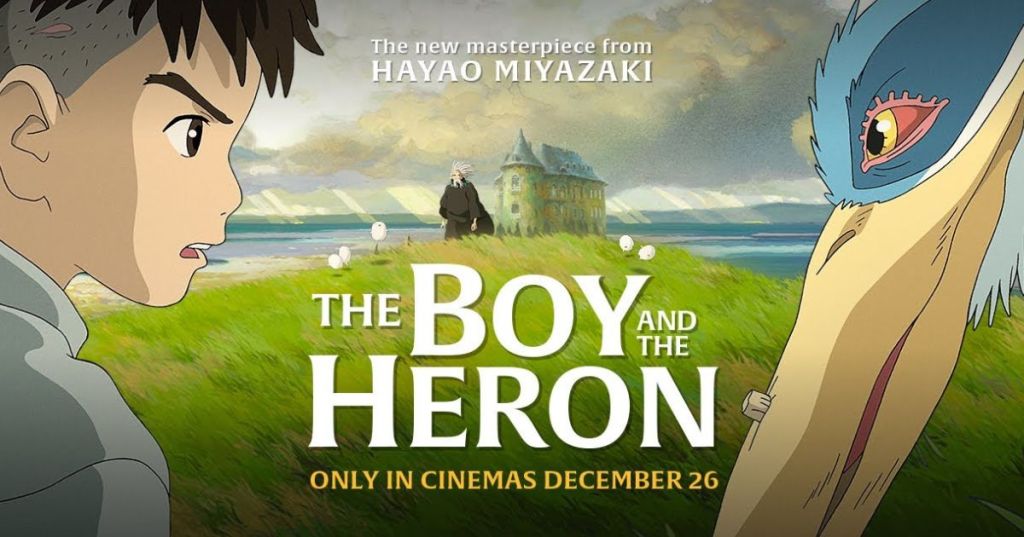
The Boy and The Heron, GKIDS/Ghibli’s latest movie, was something I learned of completely by accident while scrolling through the Fandango App. I was on the search for suggestions of films to see on my first day off in a long while. What initially surprised me, considering I run an anime blog and have seen literally nothing about this from the people I follow most closely, wasn’t just that it had been out for a month. It was that the film’s trailer promised nothing regarding the story beyond some intriguing imagery. Unfortunately, even the famous studio’s typically wonderful art fell short of expectations in this film, often overdoing it on the images and relying too much on aesthetics instead of story. The film, directed by Hayao Miyazaki, who is supposed to have retired repeatedly but keeps coming back film after film, attempted to blend elements of what made Ghibli great with a new story about re-building yourself and your family post-war… but, ultimately, the film left me feeling underwhelmed and dissatisfied. More on that in a moment.
The full movie has been summarized on Wikipedia, so if you decide to read it instead of watching it, I can assure you that you will have missed nothing of importance plot-wise, character-wise, or story-wise.
One of the major drawbacks of this film is its lackluster character development. The protagonist, Mahito, was initially interesting. He’s recently lost his mother, and within a year, his father is remarrying his late wife’s sister with another baby on the way. These are complex relationships, and the characters’ interactions at the start lend to the awkwardness felt by our MC. However, as the story progresses, we don’t really get to see his motivations for changing his relationship with his aunt to that of a motherly one. Rather, it feels forced.
The start of the movie was good, but after we entered the mysterious tower, it all fell apart. If you haven’t seen the movie, I suggest reading that wiki page linked above because I’m not going to explain the tower.
Lady Hime, Mahito’s mother, is spending a year of her childhood in the tower, as we learned earlier and figured out by context clues, but Mahito doesn’t recognize her. She figures it out first, it seems. Natsuko, his aunt, came to the tower to give birth (why? We don’t know). Mahito goes into the tower to get her and almost immediately starts calling her mother after finding her, but not enough time has passed in the movie to change perspectives, and nothing big has happened to imply that there should be a change in the relationship.
This is not like Spirited Away or Howl’s Moving Castle, where characters have the time to grow and reflect and change perspectives. This movie is just a flourish of movement from one scene to the next with what seems to be a single night passing in the entirety of Mahito’s time in the tower.
At the end of the movie, I was trying to figure out what the message of the movie was. The person who went with me suggested that perhaps the story is about how Lady Hime would have approved of the marriage and of Mahito’s moving on. Like, you are forgiven for your survivor’s guilt, but that’s not exactly presented here very well. I mean, I agree that this idea is present in the movie, but that’s just told to you. It’s shown so openly that you don’t get to feel it as an audience member. Instead, everything feels forced, making it challenging to empathize with emotional peaks happening. Like the great uncle, too. WTH?
Upon reflection of the movie, the main issue appears to be pacing. The story unfold rapidly, stitched together by aesthetic moments rather than the rich world-building or the slower, character-driven moments that typically foster connections between characters in Ghibli films. As soon as we entered the tower everything moves too fast and so you can never get comfortable. Like, I couldn’t help but reflect on the significance of food scenes in movies like Howl’s Moving Castle, Spirited Away, and Ponyo. While these scenes were undoubtedly aesthetically pleasing and quick, they carried additional layers of meaning.
In Howl’s Moving Castle, for instance, cooking together and sharing a meal symbolize the coming together of the household, marking Sophie’s acceptance as a welcomed member of the Castle by Howl and Markl. In Spirited Away, food serves as a representation of greed and gluttony, echoing a central theme in the movie. Ponyo‘s ramen scene, on the other hand, is infused with surprise and magic, introducing that the “mundane” human world has its own unique and special aspect.
In contrast, the food scene in The Boy and the Heron feels hollow. The scene lacks significance, given that we already have more than enough clues suggesting that the fire girl is the boy’s mother, the bread-eating moment loses its impact and fails to contribute meaningfully to the narrative.
On that note, while the cinematography and visuals were very much reflective of Ghibli’s style, right down to the often deliciously glistening look of food. However, this time the abundance of effort put into round, bounciness of the water and food items become too much of a focus. I mean, Mahito eats bread with butter and jam, and the jam goes everywhere. He hits his head with a rock and the blood gushes out like a waterfall. The visuals didn’t lack in flair but didn’t really elevate the storytelling as the movie progresses. It really turns the film more into an aesthetic appreciation of all the things Ghibli has done to make the ordinary magical rather than something that was adding to what was happening. It started to feel cliché even.
The dialogue often felt stilted and unnatural too, adding to the awkwardness. The script relied heavily on context and lacked the nuance required for a thought-provoking narrative beyond the first half hour or so. The attempts at injecting humor or emotional depth fell flat, leaving the audience disconnected from the characters and their journey.
Also, what was up with the birds? Philosophically nothing. Everything involving the parakeets, the Heron, and the pelicans had no meaning.
In the end, despite the film apparently getting a grand release (one that literally slipped by me), it failed to live up to its potential, delivering a lackluster experience. Despite a promising start to the film, the middle and end suffered from poor execution, underdeveloped characters, and uninspired use of their well-known art style. While some may appreciate certain elements, those seeking a truly engaging and well-crafted movie might find themselves disappointed with this forgettable offering from GKIDS. Instead, I encourage you to look at their earlier work.
–
If you enjoyed this post, please consider buying us a coffee, leaving a comment, and/or subscribing to us below!
Copyedited by: Katherine Cañeba | @kcserinlee
Discover more from The Anime View
Subscribe to get the latest posts sent to your email.

Save your, money.
LikeLike