
By: Krow Smith | @coffeewithkrow
Dragon’s Dogma: Dark Arisen is a game I hold near and dear to my heart. It is a Japanese action RPG in a high fantasy setting where you fight Harpies and Ogres, with the end goal of slaying a Dragon who has stolen your heart (literally). Is the story the best? Not really, but there is definitely something there to make you think and it is serviceable with a fantastic class system that keeps me coming back to replay it over and over again. In fact, throughout the years it has become one of my obsessions! This is why I viewed the release of the Dragon’s Dogma 2 showcase with such excitement, as I thought about what could be improved for the series. So, with my growing anticipation, I decided to finally watch Netflix’s Dragon’s Dogma and compare it with the game it is based on, which is what you are about to read below.
Before that though, some notes: I will be rating each episode on a scale of 1 to 10, depending on visuals, storytelling, and my enjoyment of the episode. I will also be referring to the works being compared as “the game” and “the anime” respectively, for the purpose of brevity. I won’t be making any comparisons or references to Dragon’s Dogma Online, as that is a Japan-exclusive MMORPG that I am not able to play. Lastly, as I go through and review each episode and talk about the game, I won’t be worrying about spoilers for either of them. You have been warned!

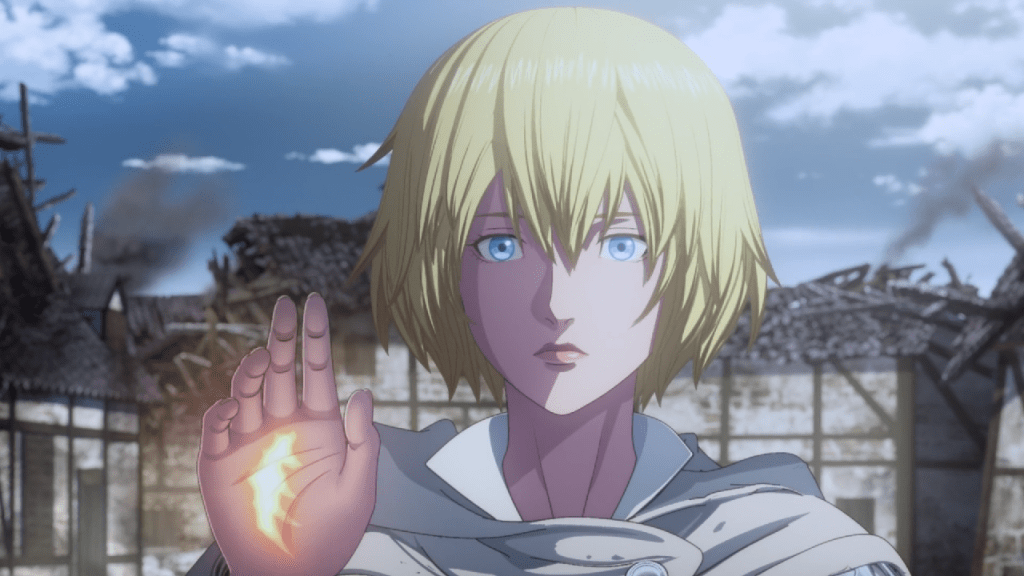
Episode One: Wrath
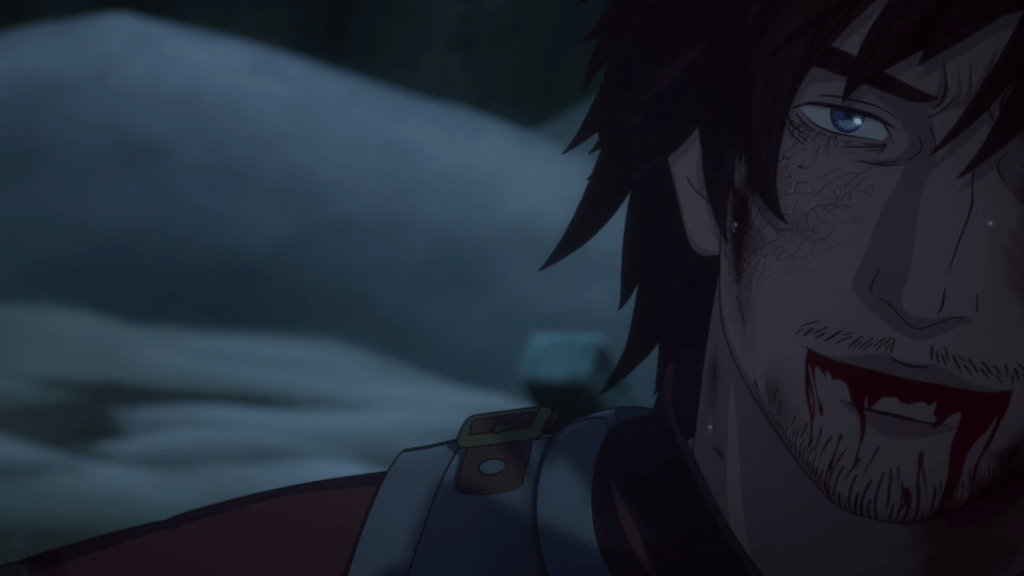
In comparison to the game, I can see where the story team is going with the plot. Not everything is going to be an exact copy story-wise, nor should it. Some things work better in the medium they were created in and need to be redone in order for them to fit into another form. Especially when, in the game, you create your character and go on a quest that’s the same for everyone who plays. With Netflix’s Dragon’s Dogma, you’re now following Ethan, who has his own past and his own path that is very different from the game.
For example, both settings for the game and the show start in a small fishing village named Cassardis. Yet, Ethan is in the forest when the dragon arrives rather than your character in-game being in the village as it happens. This is to coincide with Ethan’s backstory as a hunter in the forest rather than as a fisher, like every other person in Cassardis.
However, both have a key moment, wherein the protagonist picks up the sword and attempts to attack the dragon. This is vital to the Dragon’s Dogma story as it is the sole reason why the dragon chooses to make them (Ethan and your character) an Arisen. However, the reasons for taking up the blade are different between the game’s protagonist, player, and the anime’s protagonist, Ethan.
In the game, your character is doing it to protect your home and its people. This results in the mitigation of greater harm to the village due to your courageous sacrifice. For Ethan, it was an act of wrath, while focusing on the loss of his family and home.
This difference brings me to my next comparison: the naming of episodes for the story’s progression. When I saw that the episodes are named after the seven deadly sins, I was quite perplexed. This is not a concept in the game. I mean, you can attribute some characters to certain sins, but it’s not an overt, overarching theme when it comes to the story. This idea ends up weighing down the show as they try to shoehorn the sins into each episode, mostly unsuccessfully.
In terms of judging the first episode on its own, one thing I noticed immediately was the CGI, which does not bode well when it comes to first impressions. The animations are stiff and often appear to be emotionless, making it difficult to relate to the characters. Meanwhile, the dialogue doesn’t help with this problem either—in fact, it makes it worse. With repeated uses of trite lines, such as “breakfast is the most important meal of the day,” it’s hard to take it seriously.
There were also some awkward moments, such as Ethan and Louis (an orphan Ethan and his wife had taken in as their own) having a conversation with some guards while walking past them at a considerable distance.
Overall, I give this episode a 4/10. In terms of story, it wasn’t terrible but it wasn’t special either. Also, at this point, the CGI and stale dialogue had me quite dubious of what was to come.
Boy, was I right…
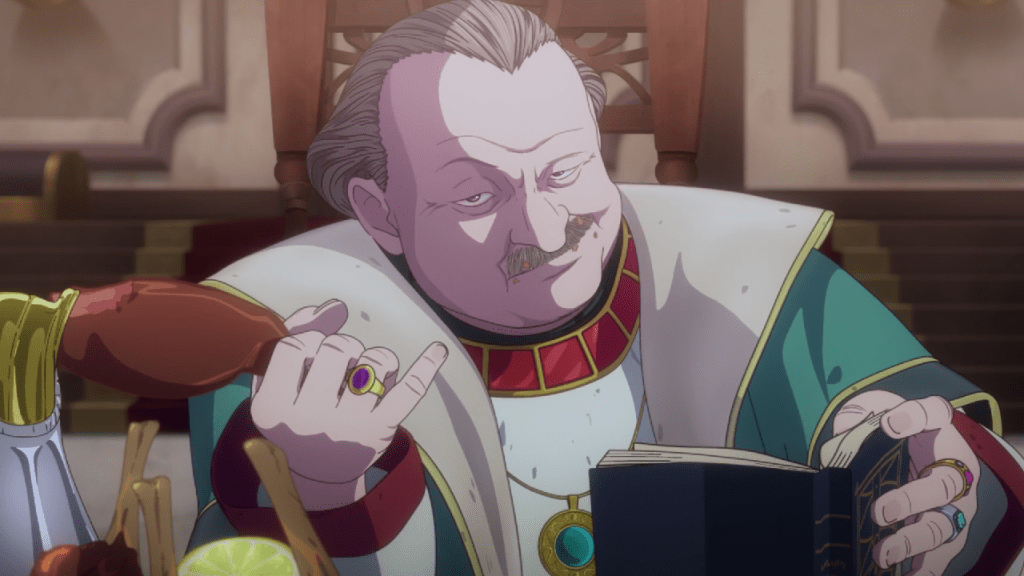
Episode Two: Gluttony
This is where Netflix’s Dragon’s Dogma strays far from the game in terms of geography and story. In the game, there are only 2 towns: Cassardis and Gran Soren.
I know, I know, it sounds ridiculous to have only 2 towns in a fantasy game, but a lot was cut out of the game during production due to budget constraints. So, I understand adding more villages for the show to make it more interesting. However, in terms of the Pawn, Hannah, they do stray quite a bit compared to the source material. This change is less understandable.
Her vocation, or what you might call “class” are significantly changed between the anime and game. There are nine vocations in the Dragon’s Dogma: Dark Arisen game, starting with the base classes of Fighter (sword and shield), Strider (dagger and bows), and Mage (staff). Then you have the upgraded versions of those vocations with the Warrior, Ranger, and Sorcerer. Next are the mixed classes, such as Assassin or Mystic Knight. Hannah is very obviously a Magick Archer, she uses a bow and magick (as it is spelled in the game). This is an issue conflicting with source materials because Pawns can’t be any of the mixed classes, only the Arisen have this option.
Not to mention the writers decided to make her detached in a way that is heartless and inconsiderate. While Pawns in the game lack a true will of their own, they simply follow the Arisen wherever they go and are always trying to help the Arisen regardless of the quest.
Anime-Hannah, on the other hand, doesn’t care to help anyone and only wishes to commit to the quest of finding and slaying the dragon. A stark contrast to Pawns in the game as they give advice on current quests and don’t complain about wasting time.
Returning to the episode, my judgment is that it is very bland, with more predictable dialogue and obvious story beats. For example, there is a corrupt mayor who is starving the townspeople and using a Cyclops as a tool to seize all of their belongings and food in order to satiate his gluttony. It was simply a classic case of “Evil, just because.”
The mayor was so comically evil that it even caused an eye roll or two and the “twist” at the end didn’t fare much better. I sighed in disappointment as the townspeople became the embodiment of gluttony. This episode is a taste of the template that the show follows throughout the rest of the season:
Something bad is happening → Main characters help → Someone or something represents the sin the episode is named after → “twist” → character(s) for the episode die or is/are afflicted → the end
There are very slight variations to this format depending on the episode, but this is what it all boils down to, and it becomes redundant almost immediately.
I give “Gluttony” a 3.5/10. It’s definitely worse than “Wrath,” but the narrative structure hadn’t quite hit me yet with how repetitive it’s going to get soon after this.
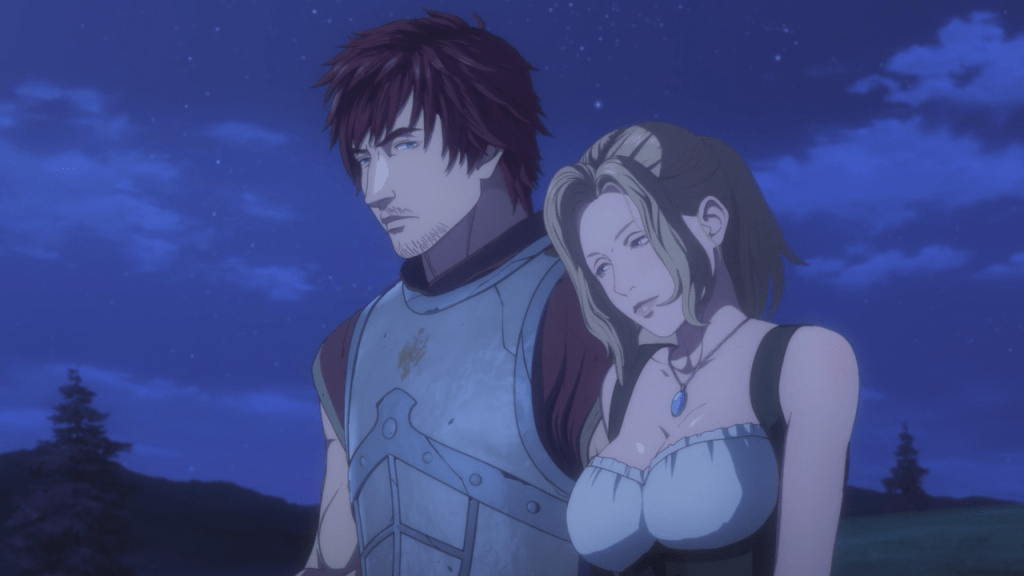
Episode Three: Envy
Disclaimer: MATURE CONTENT WARNING – This episode review contains content that we at The Anime View do not think is suitable for everyone. Possible triggers or subjects include sexual assault and suicide. By clicking “Read More,” you understand that you may encounter such content. Reader discretion is advised.
Wow, this episode was hard to watch (and not for the reasons that were probably intended)! Before I get ahead of myself, let’s compare it with the game. So far, I appreciated that the monsters looked exactly as they did in their source material. I’ve also noticed a trend in which some characters are loosely based on characters from the game.
For example, the mayor from the previous episode vaguely resembles Fornival from the game—a greedy, rich man who will gladly step on the downtrodden to get what he wants. In this episode, there is a woman named Elizabeth who is reminiscent of the game’s Madeleine, a merchant who flirts with her clients and is trying to make a fortune. However, there really isn’t much else to compare.
When it comes to the story in the anime, a couple is being escorted by two guards when they are overrun with Goblins and the wife, Elizabeth, is sexually assaulted by said goblins. This scene didn’t feel necessary and I believe the show could have suggested what was happening rather than outright showing it on screen, particularly when the assault feels so out of place from other episodes.
It was poorly done in another way too, as the other characters didn’t seem that concerned for her despite her screams. Their reactions were stiff and would be more fitting if she was simply trying to fight them off on her own and needed a little assistance.
Sure, the guards were busy fighting off Goblins themselves, but there could have been more urgency and horror in their voices or expressions as they called out to the husband, Theo, to help Elizabeth. Because of that, it felt like there was a dichotomy between the show making a big deal out of the sexual assault by focusing quite intently on it, all while the characters’ reactions downplay the event. Making the entire scene feel strange and at odds with itself.
I also have issues with the “twist” at the end. After Theo has his heroic redemption by saving Elizabeth from a Griffin, he stabs his wife, so that she will always be with him. Then she lovingly remarks, “I was always yours,” even though she actively tried to cheat on him with Ethan due to Theo’s lack of bravery during her assault scene earlier in the episode.
Theo then decides to stab himself and end his own life, so they can be together again? I end this as a question because it isn’t very clear what his intention was and I’m only assuming. The entire moment felt undeserved and unoriginal, like a strange Romeo and Juliet situation without having spent an entire story with these characters or connecting with them. I was simply left with the thought: “Well, glad that’s over with.”
By the end, I had no empathy, sympathy, or anything for Theo or Elizabeth. Total apathy was felt, as though I gained nothing of value after watching this episode. I rate it a 3/10 and the reason it isn’t any lower is because the guards, Balthazar and Simon, make this episode more watchable.

Episode Four: Sloth
The episodes feel very paint-by-numbers at this point and are a real drag to get through. During this episode, I heavily considered not finishing the show. However, to make a full comparison between the game and the anime, it was imperative that I finish the season. So on I watched!
Ethan and Hannah find themselves traveling through a cavern where people are addicted to a moss, causing them to laze about. This episode did a poor job of making me feel any kind of empathy for the characters that Ethan and Hannah are trying to help. Perhaps it was the stiff CGI, or the painfully predictable dialogue once again, but either way, it resulted in a complete lack of emotion in the characters and more apathy from me. Even Ethan’s rage felt like there was no tension in his body, just angry faces with no power behind his attacks.
It is at this point in the show that Hannah is expressing more care and concern for humans, while Ethan is beginning to experience a lack of empathy for them instead. The change starts almost immediately and becomes more obvious by the next episode. However, considering there are only seven episodes in the season and the lacking quality of its writing, it realistically couldn’t have had a more natural progression.
In comparison with the game, there are a few discrepancies. This episode revolves around moss that these people are using habitually as a drug. The problem is, in the game, there is no moss. There’s a curative called “Moss Poultice,” but it’s not made with actual moss, nor are there any notes about recreational use. In fact, there are no recreational drugs in the game. The closest you get is ale.
Then, while fighting the Hydra, we have our male lead, Ethan, go into some kind of “berserk” mode, with glowing red eyes and uncontrollable growling. This is certainly not in the game. There is no “rage meter,” so to speak, for the Arisen—this is exclusive to the show.
Not that rage-mode is inherently a bad thing, just that I find, as a huge fan of the game, it creates a disconnect and makes me think of other series rather than the source material.
In addition to my previously addressed discrepancy that Pawns can’t be Magick Archers, Hannah not only uses a skill exclusive to that vocation, she uses it incorrectly. The skill in question is “Magickal Gleam” and it creates a bright light. However, in the game you use a bow to release it while Hannah casts it with her staff. A small gripe, yes, but I feel details such as this are important to keep straight. Lest anime fans decide to pick up the game and find themselves confused.
I give this episode a 2/10 for making me question my life choices.

Episode Five: Greed
For this episode, the guards, Balthazar and Simon, return as they are hired to kill a Lich in order to free up a route for safer travels. In the process, however, Balthazar becomes cursed with greed and impales his best friend, Simon, foregoing his morals and code of honor.
There isn’t much to compare with the game. Yet again, it strays far from Dragon’s Dogma: Dark Arisen in favor of a confused plot about the betrayal of friendship and ethics while being cursed with greed. However, I will say that I did care a little bit about the returning characters, Balthazar and Simon, as we had some time to get to know them. It still doesn’t mean their “tragic” fight to the death made me feel anything other than boredom, but it was nice to see them again regardless.
The animation, in the beginning, made me laugh as the Lich’s army of Skeletons running looked very silly to me. There was also a discrepancy between the quote “It burned everyone’s homes to the ground,” and then showing buildings still standing.
I give this episode a 3/10, Balthazar and Simon once again made the episode slightly more enjoyable. Not by much, though.
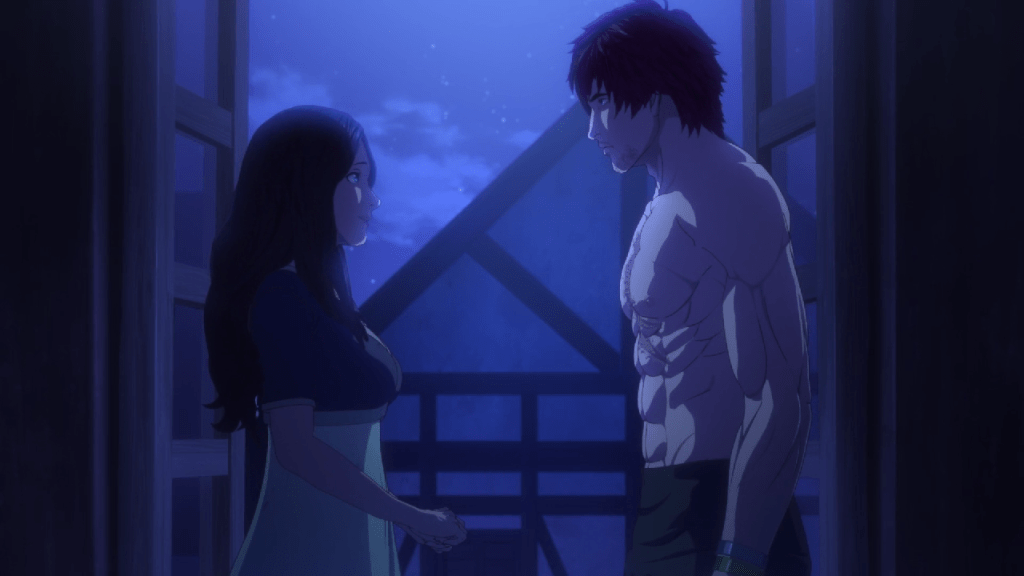
Episode Six: Lust
In this episode, Ethan and Hannah decide to rest at an inn for the night. When a Succubus imitating Ethan’s late wife seduces him, causing him to get lost in his memories of her. Until he snaps out of it and slays the monster. The plot felt shoehorned, like this whole episode was just an excuse to have a lust theme somewhere in the season.
There are no real game similarities in this episode, aside from the act of killing a Succubus. As a result, I didn’t write many notes other than “There really isn’t anything to note anymore,” and “The sex scenes are very uncomfortable and awkward.” There just wasn’t much else to point out. However, there was something that kept coming to mind as I was watching the show, and that’s Berserk.
Okay, here me out: In the first episode of Dragon’s Dogma, we’re shown the death of Ethan’s pregnant wife and adopted son, making him lose everything right before his eyes. In turn, the loss causes him to swear vengeance against the Dragon. Then, we have episode three, “Envy,” when it comes to the Goblin scene with Elizabeth, which is reminiscent of the disturbing Trolls from Berserk. In the fourth episode, “Sloth,” Ethan starts going into a state of complete rage, as does Guts in Berserk. Moreover, in this episode, “Lust,” we have a monster disguising herself as a human to fool men into intimacy. The part that reminds me of a scene in the first Berserk manga is when Ethan kills the monster after having just been intimate with her. The CGI also doesn’t help in separating the two, either.
The game, Dragon’s Dogma: Dark Arisen, was very much inspired by Berserk and there was actually a merchant that sold the armor of Guts and Griffith from The Golden Age Arc movies as an in-game promotion.
I’m not saying it’s bad to be inspired by Berserk, in fact, I feel that inspiration can be a base for great things. The game itself is basically a love letter to Berserk! The problem is when, in the case of Netflix’s Dragon’s Dogma, it feels like it is trying to replicate the series rather than be inspired by it. As what tends to happen in cases such as this, is you have dark tones with blood and death, but no philosophical bite; no characters with depth and complexity; and no worldbuilding to make these story elements make sense.
Dragon’s Dogma, the anime, has a philosophy and it’s “humans suck.” The characters are bland and barely have a pulse; they’ve built a world with little history and no geographical coherence; and because of the poor writing, I cannot help but compare it to better work out there. Everything feels tacked on and yet so limited at the same time.
I give this episode a 2/10. The only reason it isn’t lower is because the CGI didn’t stutter or lag as I’ve seen before in other shows.

Episode Seven: Pride
Finally, the fight with the Dragon arrives, it’s the episode I’ve been waiting for. The reason this episode is important is because, in the game, this is the beginning of a series of choices that reveal a lot about the Arisen, the Dragon, and exposes the actions of the previous Arisen.
In the game, the fight with the Dragon isn’t simply something you’re building up to, it’s a peek behind the curtain before the full reveal of his purpose later on as you progress. The Dragon isn’t just some incarnation of evil with a taste for destruction. He has an objective, which is to choose the Arisen. When you pick up the blade to protect your small village, it is just as imperative as fighting the Dragon after a long journey. Your character is chosen specifically to kill him, as the Dragon’s existence is to find the next god. His divine purpose is exemplified by the fact that he is weak to the dark element and has resistance to the element holy.
By killing the Dragon, you then eventually get to proceed in fighting the Seneschal (the god of the game) and thus, taking their place if you defeat them. In this world, all of the energy and life is made by the Seneschal, as that is all they provide—creation and energy. However, after a while that energy becomes stagnant, causing the world to fall to a similar static state. Thus, the need to send out a Dragon to choose the next Arisen (a candidate to become the next Seneschal).
In the game, before fighting the Dragon, he gives you the choice between rescuing your beloved (the person who loves you most or hates you the least) and killing him. Or to sacrifice your beloved and he will go quietly, letting everyone think you defeated the dragon and making you the ruler of the land.
What happens if you don’t have a beloved? Well, for your character, it’s impossible as it is a forced mechanic. However, in the game there is an Arisen named Dragonforged who did not have a beloved and was simply left with the option to kill the Dragon, but failed in his attempt.
So, as a player, your only choice is to sacrifice or fight. This exemplifies the choice of the well renowned Arisen before you, King Edmun, as this is where you figure out that he chose not to kill the dragon and instead sacrificed his beloved to rise to the throne.
In the anime, the fighting sequence is out of order in comparison to the game. Even though it felt wrong considering I’ve fought the dragon countless times and know the battle by heart, I was able to withhold such feelings and understand that the order in which the battle happens isn’t so important.
What is important is the Dragon’s reasons. The anime does explain that Ethan was chosen to kill the Dragon. However, where the show falls flat in its explanation is in how they portrayed the Dragon as killing simply to kill. Relating it to Ethan as though he is killing the Dragon just because he can. This portrayal is very reductive not only for the Dragon, but for Ethan as well. I highly doubt Ethan would go out of his way to kill the Dragon for no reason.
As for the beloved, Ethan no longer has one as his wife was killed. It was strange but nice to follow an Arisen without a beloved, as it is forced on you in the game. It caused me to watch more intently since I didn’t know what to expect.
Judging the episode on its own merit, the use of pride as the ultimate sin that was committed by Ethan makes no sense to me. It seemed more like wrath than pride and it felt like a punishment after completing what he was meant to do. Not only that, but the idea the Dragon was trying to push that humans are full of sin and it was shown across Ethan’s journey was very obvious and didn’t make the entire gimmick feel any less unoriginal.
Though, the worst part is when Ethan turns into the dragon due to his committing sin, that being pride. In the game, the only time you are turned into a dragon is when you are bested by the Seneschal, off to find the next Arisen. There is no gameplay, it’s just a simple cutscene, but it shows the dragon’s holy purpose and expresses that Dragon’s Dogma: Dark Arisen is cyclical. As the game is an endless loop:
Seneschal creates Dragon → Dragon creates Arisen → Arisen fights Dragon → Arisen Fights Seneschal → Repeat with new game+
Meanwhile, in the show, it simply ends on the Arisen becoming a Dragon as though that is the only option, making it feel finalized, yet also incomplete. What is the purpose of the Dragon? Why bother creating another Arisen? These are some of the questions the show has left me with as the ending lacks any real meaning or reason for anything to happen the way it did.
I give this episode a 2/10. The entire ending left me rolling my eyes and scratching my head.
The Conclusion
Well, there you have it! My entire review of Netflix’s Dragon’s Dogma and how it compares to the game is finished. Now I feel like I can truly put to rest this awful anime from my mind and continue to look forward to Dragon’s Dogma 2, set to release on 22 March 2024.
If you made it this far, Thank you! Please consider subscribing for more content and/or tell us what you think!
Discover more from The Anime View
Subscribe to get the latest posts sent to your email.
