
By: Peggy Sue Wood | @pswediting
MATURE CONTENT WARNING – This post contains content that we at The Anime View do not think is suitable for everyone. Subjects or possible triggers will include sexual assault. By clicking “Read More,” you understand that you will encounter such content in the discussion here. Viewer/reader discretion is advised.
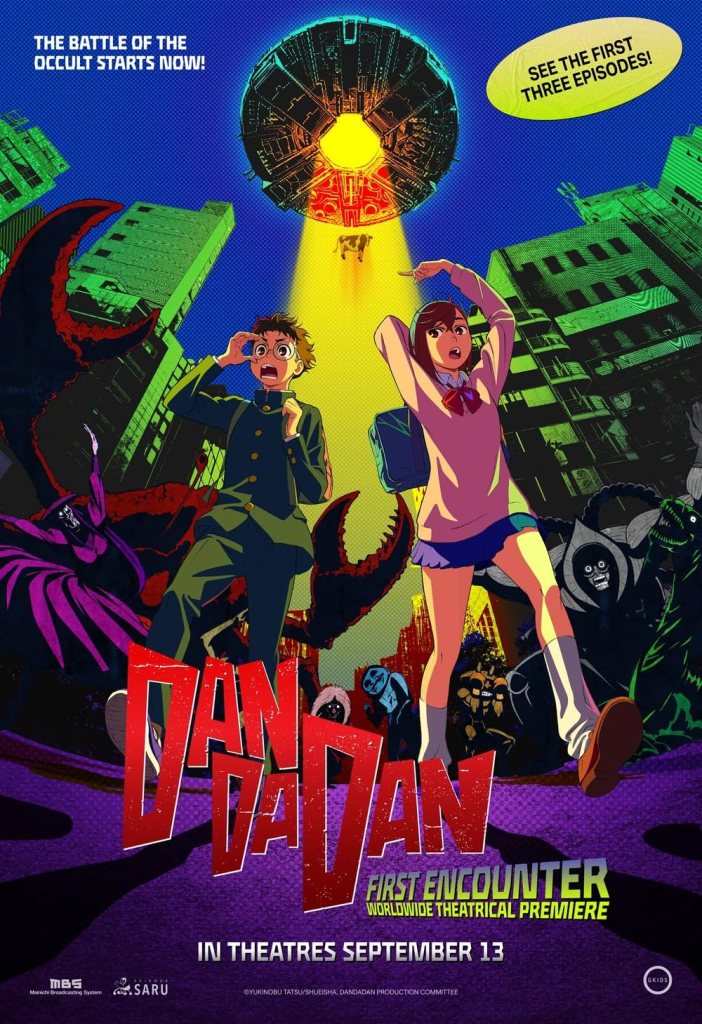
When Dan-Da-Dan first hit U.S. theaters, I was surprised. A show packed with ghosts, sci-fi, and two awkward teens on a path to romance seemed like an instant hit. Then, finding out it is an adaptation of a well-received manga in my friend group—well, let’s say that theatrical release gave me hope that it would live up to its promise. However, after watching the adaptation, I can’t help feeling disappointed and ready to drop the show—and I’m not inclined to pick up the manga either.
Let’s start with the good: visually, Dan-Da-Dan is stunning. The fluid animation, vibrant colors, and dynamic direction elevate the fight scenes, rivaling top-tier shounen like My Hero Academia. The chaotic-yet-controlled supernatural battles pull viewers into a world of the bizarre. The character designs strike a balance as side characters embrace a wild aesthetic reminiscent of Jujutsu Kaisen, while the main leads feel like believable high school teens with their standardized hair color, tame accessories, and uniforms that actually look like uniforms. The voice acting, too, brings out the quirky personalities, adding warmth and charm.
The pacing is solid, especially during action sequences and slice-of-life moments between Momo Ayase and Ken Takakura (“Okarun” as Momo calls him). High-stakes scenes are gripping, while the quieter moments offer a calming respite—in essence, a fun and good contrast.
So, here’s the issue I have… all the visual flair and good character work can’t fully distract from the show’s biggest flaw: the uncomfortable, sexually charged “humor,” often at the expense of the male lead.
If you have yet to watch this series, allow me to set the scene in a way that no one warned me about as they glossed over a glaring red flag that pushed me to write this review: In Episode 1, we have a girl stripped down to her underwear and threatened with gang-rape by a bunch of men (aliens) and “mental influence for forced arousal” (like drugging) and a teen boy assaulted by a “turbo granny” (ghost) who wants his penis and spends the next eight episodes holding his genitals hostage in various ways. Not the way you will hear it phrased by most people, mass media, or fan audiences, but a major issue I have with this show that should be warned to anyone thinking of picking up this series.
Dan-Da-Dan leans hard into awkward, embarrassing scenarios and compromising positions of its leads as the focus of the comedy. Unfortunately, it doesn’t land. Maybe it’s my discomfort with seeing teens in these situations, or maybe it’s the over-reliance on these jokes, but it’s hard to ignore. Even framed as “comedy,” they feel more cringeworthy than funny.
Sexual humor can be funny, but here it feels juvenile, trying too hard to embarrass rather than genuinely amuse. Instead of enhancing the story, it undercuts it, making compelling scenes feel awkward and disjointed.
This is frustrating because Dan-Da-Dan has real potential to be an instant classic or a fan favorite for years to come. Momo and Okarun have great chemistry, and their interactions are often heartwarming and hilarious in a slice-of-life way that could compare to Horimiya. Momo stands out as a tough, empathetic, and grounded protagonist while Okarun’s journey from awkward outsider to confident fighter is compelling, but the barrage of bad jokes undermines the emotional beats.
While comedy is subjective, Dan-Da-Dan relies heavily on edgy, uncomfortable humor and like American adult animations (Family Guy and Big Mouth, for example), it cranks up that awkwardness and sexual innuendo for shock value. These jokes often involve Okarun being sexually harassed—by aliens, peers, and older women. He clearly expresses discomfort, yet it’s played for laughs in the same way that you see in old harem anime, sending a troubling message: who cares if the man is uncomfortable?
Well, I care.
American adult animation often uses this formula: take an already uncomfortable topic and make it absurdly awkward. Family Guy has made slight improvements over the years but still features characters engaging in “joking” sex crimes. Big Mouth explores puberty with explicit humor for adult audiences, often veering into the distasteful. The same applies to Dan-Da-Dan.
I don’t want to say that there isn’t a place for sexual humor. This post is about media literacy. If you like the series, as an adult, that’s fine, but think about it critically for a moment. Is a high school series aimed at a young demographic (shounen) really the place for this kind of humor? More importantly, what message does it send to young men? Dan-Da-Dan’s comedy tells us it’s okay to dismiss male discomfort, but that’s a message I think we shouldn’t continue to normalize. It’s a message that feels like a step back, as well.
At its core, Dan-Da-Dan is a wild, imaginative story with a great cast and heartwarming moments, but its over-reliance on awkward sexual humor dilutes its impact. When promoters and fans discuss the series online without acknowledging this glaring issue, it becomes more than a matter of taste—it’s about recognizing when jokes undermine the story and characters, and, in this case, they do.
Copyedits by: Krow Smith | @coffeewithkrow
Discover more from The Anime View
Subscribe to get the latest posts sent to your email.

3 thoughts on “[Review] Dan-Da-Dan: What The Hype Doesn’t Mention”