
By: Peggy Sue Wood | @pswediting
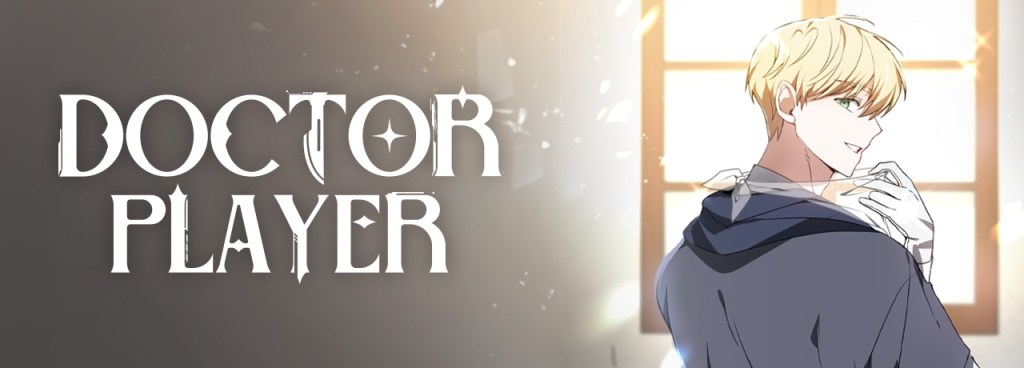
Dr. Player, available on Tapas, has quickly become one of my favorite reads for the year thus far. It offers a fresh take on the medical drama genre within a fantasy world by blending elements of class struggle, innovation, and a unique isekai-like system.
When I first started reading Dr. Player, it reminded me of Doctor Elise: The Royal Lady with the Lamp, and the vibes between the two stories aren’t too far apart. While Doctor Elise leans more toward romance in its later chapters, Dr. Player focuses more on the political drama simmering in the background. However, like Doctor Elise, the primary focus remains on the medical work and the politics within the world of healing, with the larger political dynamics playing a more subtle, secondary role until—presumably—later on.
The protagonist of Dr. Player, Raymond, is the illegitimate son of a king. In this society, bastard children are considered sour fruits of the family tree. Often treated poorly as representations of their parents’ faults. As the King’s illegitimate child, Raymond’s treatment is perhaps worse than most, with advisors telling the King to let the child die rather than admit to having ever been unfaithful.
After years of abuse in the castle, what at first seems like a glimmer of hope when he discovers his magical ability as a healer, turns into yet another dark mark on his records as his healing powers are practically non-existent, leaving him with no path to success or respect.
Just when it seems like he’s doomed to a life of mediocrity and continued mockery, Raymond stumbles upon the knowledge of “medical science,” with visions of what we would probably describe as modern medical practices, becoming a revolutionary concept that allows him to cure diseases magic cannot.
This blend of science and fantasy sets Dr. Player apart from other stories, as it shows how the reliance on magic over medicine could create stagnation of development in society. I think, and this is loosely tied here, it kind of relates to many people’s feelings about AI in arts and writings—a magical tool that can do a lot, but which could also stunt development of such skills in the people using it. Anyway, rather than relying on traditional magic, Raymond’s abilities hinge on the knowledge he gains through hard work and study. It’s refreshing to see a protagonist who builds his way to the top, not through raw power or hidden talents, but through intellect and perseverance in pursuit of a stable, well-off lifestyle.
What probably draws me into the series most, however, is not the medical science but the deeper themes of class struggle and prejudice that are laced throughout the story. Raymond’s illegitimacy and lack of magical prowess make him an outsider, socially and politically, and as he begins to apply medical science, he faces resistance from a society unwilling to accept change. The tension between traditional magical healers and Raymond’s new methods offers a powerful commentary on the rigidity of social systems, as well as the courage it takes to challenge the status quo.
The world-building is effective, presenting a sharp contrast between Raymond’s humble beginnings and the more privileged individuals around him. This dynamic enriches the narrative with moments of triumph and social critique, as Raymond’s revolutionary ideas face resistance from both the medical establishment and those who judge him based on his status.
Both the novel and comic adaptations on Tapas offer different experiences for readers, but I think that fans of fictional medical and political dramas, underdog stories, and isekai or transmigration-style systems will likely find Dr. Player to be an engaging read. The comic adaptation visualizes the tension and conflicts of the story well, with art bringing Raymond’s challenges and victories to life in a way that I find easier than reading the novel. The novel allows readers to explore the deeper sides of Raymond’s internal struggles, motivations, and the nuances of the world around him as well as with surrounding characters since you get to see more of their emotions and thoughts.
So, if interested—I highly recommend checking out both versions of the story!
If you have already begun reading it, I hope you’ll share your thoughts in the comments below!
–
If you enjoyed this post, please consider buying us a coffee, leaving a comment, and/or subscribing to us below!
Copyedited by: Krow Smith | @coffeewithkrow and Katherine Cañeba | @kcserinlee
Discover more from The Anime View
Subscribe to get the latest posts sent to your email.
