
By: Peggy Sue Wood | @pswediting
Author Note: Season 5, the final season, ended in February of this year and has been reviewed extensively. As such, rather than a review or analyzing the season, I just want to take a moment to chat with you all about how I’ve been reflecting on the end of this series. With that in mind, thanks for reading!
I used to be a big fan of Aggretsuko, and while I still appreciate the show, I’m not quite the avid supporter I used to be. Initially, the show was a collection of short, 1-minute episodic skits about Retsuko, a 25-year-old anthropomorphic red panda, going through the daily struggles of being a young, working adult in Tokyo.
I loved seeing Retsuko progress through her days at work, dealing with bosses, colleagues, and the various stresses of life. Her polite demeanor and good-natured spirit when meeting with people while secretly stressed and frustrated on the inside were relatable, as were the moments when she’d release her pent-up frustrations through death metal karaoke after work. The latter part maybe wasn’t a related experience, per se–but certainly a feeling I could empathize with.
At the time the series started releasing, I was in my early twenties and very close to Retsuko’s age. I could relate to Retsuko’s daily struggles. The show reflected the frustrations that come with being a young adult, like dealing with family pressures, embarrassing yourself outside of work by going to the store in pajamas, and so on.
I also appreciated how it subtly showed the ways in which struggling with larger issues, like having to work a job you hate because you need to pay rent or the pressure to reach societal expectations, are contributing factors to how those small and insignificant challenges, like dealing with the remnant of a sticker, can lead to the feeling of wanting to blow up in an expression of rage. Overall, I found the show charming, and the death metal karaoke, while not my usual taste in music, was a comedic touch that made me laugh.
So when Netflix picked up this Sanrio series and expanded it into a full-length show, I was excited. Season 1 was a great start too, providing an inside look into the young adult lifestyle in Japan while still maintaining relativity to the international audience members (or, at least, to me). The show tackled real-life issues like sexism, office politics, and the challenges of dating but still kept delivering great comedy sprinkled throughout.
Best of all, the Netflix series continued to deliver the same message as the original shorts: life may not be perfect, but it’s worth working through the struggles to make things better. It showed how perspectives can change.
The way these ideas were expanded in the show were great. It showed how interconnected we all are in world, particularly in a close working environment. Moreover, it showed how others can relate to the exact same struggles, even when we think no one else could. It also showed the different people you encounter in your life that you may not have expected to run into.
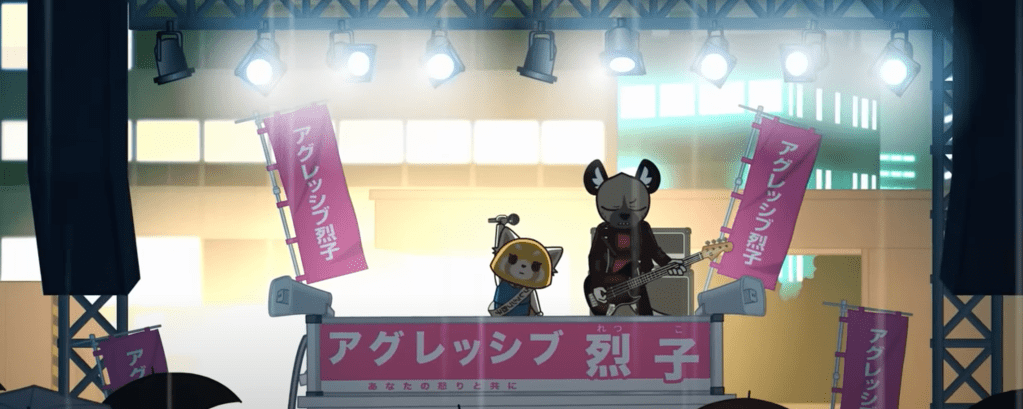
However, over time, the show has taken a turn for the obscure in more ways than one. While the initial appeal of the show was its relatability, it has since moved away from that core message of working through things and relating to others with new storylines and plot points that have become increasingly disconnected and bizarre. These new stories where Retsuko is dating a tech millionaire, or becoming an idol, or running for a seat on the National Diet in a random “Party of Rage” at such a young age when the average seems to be people in their 50s have made it difficult to follow along between seasonal focuses or to feel as invested in the characters. I mean, how many young adults really go through that in Japan or anywhere else?
That’s not to say that the show lost all moments of reliability and enjoyment. For example, I liked some of the approaches taken to Haida’s character this season. Unemployment, a family with set values, and hard-to-change minds are real challenges young adults face. So too, are the parental judgments and reservations Retsuko’s family had over their daughter’s new relationship that seemed to be progressing faster than what the parents may have expected, and with a partner they don’t think is good for their daughter given his current station in life (at the same time failing to realize that Retsuko has been just as lost until recently). These were all ideas that were introduced somewhat well in Season 5, but which seemed to fall short by the end. There were also relatable short clips you could take out of context and still empathize with or laugh at, like when Retsuko was belting out, “I can’t even keep houseplants alive~!” I was in stitches. However, these moments weren’t enough to make the content feel like the same kind of enjoyable watch it used to be.
The snippets like those described above, the ones where you could see the original appeal come back into frame, are what pushed me to complete my consumption of the latest season when watching had begun to feel more like a task than entertainment. It is that feeling of “working” through the show that makes me feel like the relatability ended long ago, and that now I’m just watching it because it’s about to end.
To conclude my reflection here, while I still appreciate the show and its initial appeal, the recent changes have made it less enjoyable for me as a viewer, and–unfortunately–many others seem to agree.
–
If you enjoyed this post, please consider buying us a coffee, leaving a comment, and/or subscribing to us below!
Copyedited by: Katherine Cañeba | @kcserinlee
Discover more from The Anime View
Subscribe to get the latest posts sent to your email.
