

By: Peggy Sue Wood | @pswediting
To be honest with you all, I really enjoy zines. If our blog ever gets to the point where our team decides to get a booth at a convention, I’d likely create and print a zine to distribute at the event. They’re fun and easy to make, and just something I enjoy reading.
A zine, in case you do not know what they are, is short for “magazine” or “fanzine.” They are self-published, small-circulation booklets or mini-magazines. Zines are often created by one person or a small group and cover a wide range of topics, including art, culture, politics, music, and personal interests. They are usually produced using simple, low-cost methods such as photocopying or printing and are distributed through independent channels like local shops, events, or online.
Essentially, it’s like making a fun booklet for yourself, friends, family, and potentially a larger readership. You can find numerous tutorials online, and there was even a movie called Moxie on Netflix that gives a great example of how they can be made and filled. A teacher in elementary school showed us how to make one once and for a while I would create little zines at home with newspaper cut-outs, my own drawings, stickers, and so on.
Because zines are typically known for their DIY aesthetic, unique content, and personal touches from small creators, they tend to be a really popular medium for creative expression and alternative viewpoints, featuring diverse and sometimes eclectic ranges of content or overlap.
So, if it is not obvious yet based on that spiel and my previous confession at the beginning of this post: I really like zines and when I was handed a zine at AX, with some production level printing and graphic designs, I was kind of excited to check it out.
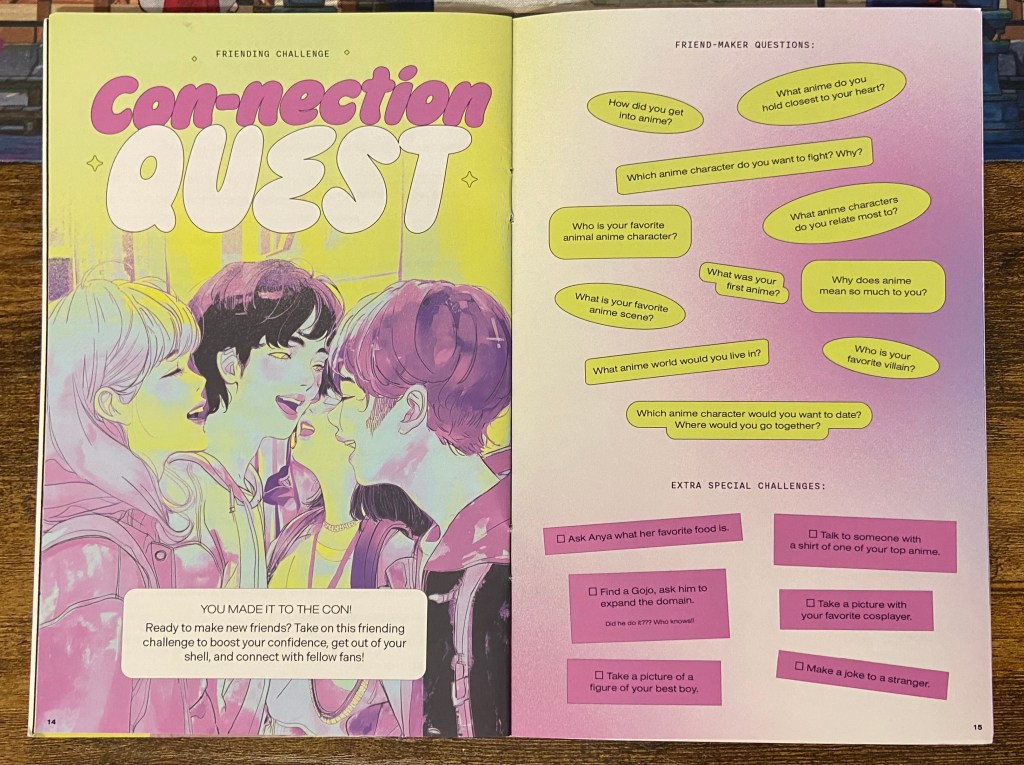
The zine itself comes from iiZO, which is a brand that markets itself as a “Premium Anime Apparel” store. Issue 01 of this zine, which is the handout I received and am reviewing here, is clearly intended to promote merchandise from the iiZO shop, which feels a little less inspiring compared to the medium’s known identifiers.
Now, there’s nothing wrong with selling while keeping things casual like this brand did with their zine. Moreover, considering everything inside the zine, it’s a pretty good one. The activities were simple, enjoyable, and laid-back. I appreciated how accessible they were in terms of reading comprehension and clarity. These activities are definitely something that small children to adults can do. That is to say that the zine itself, while mostly aimed towards selling products, offers something fun to do while waiting in line for a panel without being overly complicated.
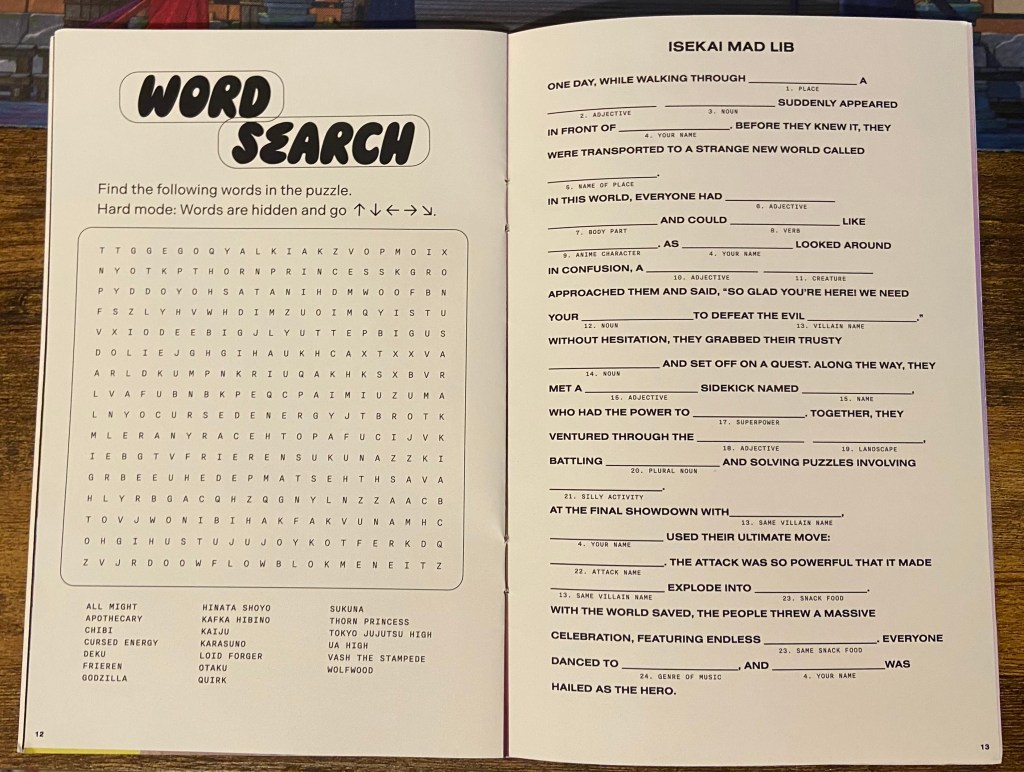
The main message of the zine too was pretty wholesome, encouraging people to connect with others at the con through a bingo activity, through some conversation starter questions, and a mad lib section. It also had some solo-activities, such as the word search.
I appreciated that the marketing pieces were on their own pages, and activities in their own section as well, this way if you wanted to do an activity you don’t need to feel distracted by the marketing. Likewise, I like how the marketing played into the format, creating—for example—a collage to advertise some of the merchandise and placed the QR code for a discount low on the page.
I don’t think that this zine will be widely distributed outside of conventions though. In fact, it’s totally possible that there will never be another issue of this zine and it disappears into the ether like so many printouts before it.
So, why then am I writing this review? What the heck is the value of it?
Well, in some small way I kind of hoped me gushing about a zine would get someone out there interested in making one. While on a much more present and real note, I’m not sure how I feel about brands making zines as a sales tactic and want to discuss it.
This is perhaps a more generalized topic, a marketing topic really, and one that may not seem to fit with an anime blog like ours. However, I’m a big proponent of media literacy and if we’re going to keep getting handouts like these, we should be aware of them and what they mean or could mean.
See, to sum up a review of the zine itself, I’d say that I liked this zine a lot. While it was more than 50% marketing materials and advertisements, the content didn’t feel like ads most of the time. They felt natural and familiar and fun, like many zines are. However, that in itself can be a problem because it is a classic example of how marketing can be disguised as content. Over time, audiences can and often do become accustomed to consuming company-produced content without questioning its source and potential bias, and the ability to critically evaluate media and seek out diverse sources of information may diminish. This is probably not the intent behind this particular brand’s zine, but is a potential consequence.
For example, in this particular zine there is a collage—it looks cool. Like the kind of collage I probably would have made for my high school art class and something I would consider hanging up. Though, it is also is an advertisement for the figures and items that the brand sells and a 15% off code.
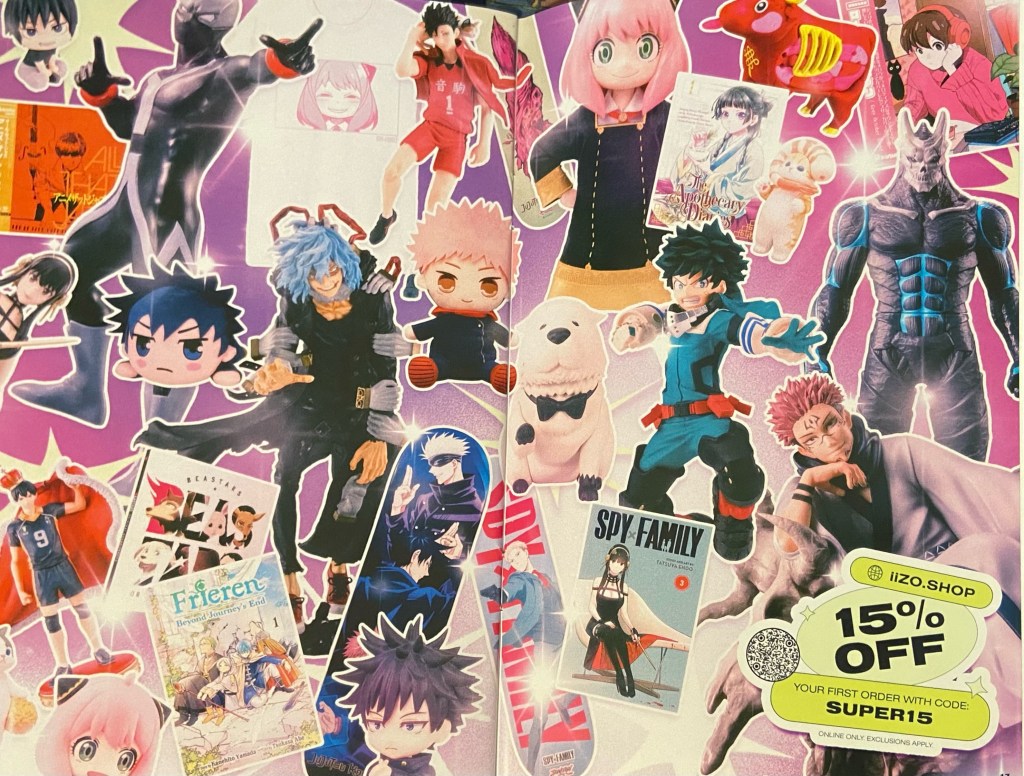
The collage acts as a form of native advertising, a type of advertising that blends in with regular content. While this isn’t exactly native advertising since it comes directly from the company selling the product, it shares similarities. The company is producing its own content and using it for marketing purposes, aiming to make it appear as though it’s just a collage or regular editorial work by a fan in a zine.
The people behind this particular zine are likely fans of what they are marketing, and my intention is not to criticize them or their work. The goal is to help readers recognize this tactic. While iiZo is transparent in their advertising with this zine, I believe some companies might try to emulate iiZo, but potentially won’t clarify which content is directly aimed at selling to readers. Like in the above, where iiZo has this collage but only identifies page 17 as a “15% off online coupon” when both pages 16 and 17 are, in fact, an advertisement of what they sell.
Going a bit beyond the zine, while writing this, I received several emails from companies hoping to advertise on our blog. Some ask about whether we at The Anime View do sponsored content, and I often reply that we might be interested but haven’t done so yet. The responses can be alarming, with many wanting us to create posts linking to their product without disclosing that it’s sponsored. This practice is both unethical and illegal in the US.
All this to say that all of us should stay vigilant as both a consumer and a creator. Use your media literacy skills to recognize what might look like natural content may actually be a marketing ploy. As consumers and creators, it’s essential to remain aware and critical of the content we encounter. Understanding marketing tactics, like native advertising, helps us navigate the media landscape more effectively. Whether you’re enjoying a zine, browsing blogs like ours, or watching videos, keep your media literacy skills sharp. Try to recognize the difference between genuine content and marketing efforts, as this will help in ensuring you stay informed and make thoughtful decisions about what you consume and create.
With that said, thank you for taking the time to read this! Stay savvy and keep questioning the content you come across. If you have any experiences or thoughts on this topic, feel free to share them in the comments!
Copyedited by: Krow Smith | @coffeewithkrow
Discover more from The Anime View
Subscribe to get the latest posts sent to your email.

Sometimes; America needs to, ‘chill-out’.
Not, ‘grow-up’.
LikeLike