
By: Peggy Sue Wood | @pswediting
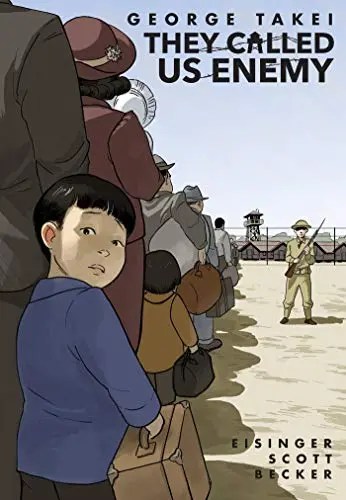
When I first came across They Called Us Enemy while searching for graphic literature to incorporate into a course, I was excited to read it. I had heard great reviews about it before, but reading it myself really helped highlight why this work has been so impactful since its publication and why it was such a big feature in the Japanese American National Museum in Los Angeles several years ago.
In this graphic memoir, George Takei (famous from his time on Star Trek and his work thereafter) recounts his childhood experience in U.S. Japanese-American internment camps during World War II, an era marked by fear, prejudice, and the erosion of civil liberties for Japanese Americans—and really, Asian Americans as a whole.
The story is told through the eyes of his younger self, allowing readers to experience the confusion and injustice of internment from a child’s perspective, while his adult voice adds context and clarity.
What makes They Called Us Enemy stand out to me, is that it opens the door to discussions not only about history, but about contemporary issues of citizenship, race, and belonging as well. It is also something the author touches upon at the end of the book, which has only become more and more prevalent since it’s publication.
It connects to a broader ecosystem of materials too. Takei has spoken extensively about his experiences in interviews and public appearances, many of which are readily available as recordings. While reading, I went down a rabbit whole of videos each time these appearances were mentioned in the book. These supplementary resources can enrich classroom engagement, allowing readers to hear directly from the author and deepen their understanding of the historical context. The memoir itself frequently echoes themes and stories Takei has shared elsewhere, creating opportunities for meaningful cross-referencing and multimedia integration that I found deeply moving and engaging.
Additionally, the book situates personal narrative within larger historical events, such as Japanese American internment, helping readers grasp the scale and implications of what might otherwise feel like distant history. It connects to what we see now for those that are watching the news stories covering immigration and citizenship issues here in the US. It humanizes a topic that is often reduced to dates and policies by recontextualizing it to be both memorable and impactful.
Ultimately, They Called Us Enemy stands out as an exceptional work, one that bridges disciplines, invites empathy, and encourages more critical thinking and emotional connection in an age where the inundating of information can cause numbness. It is a compelling entry point into difficult conversations while remaining accessible and engaging, making it a graphic novel I think more people should read.
For anyone seeking to diversify their readings, this graphic memoir is not just a strong addition to your list—it’s an essential one.
Edited by Krow Smith | @coffeewithkrow
Discover more from The Anime View
Subscribe to get the latest posts sent to your email.
