
By: Peggy Sue Wood | @pswediting
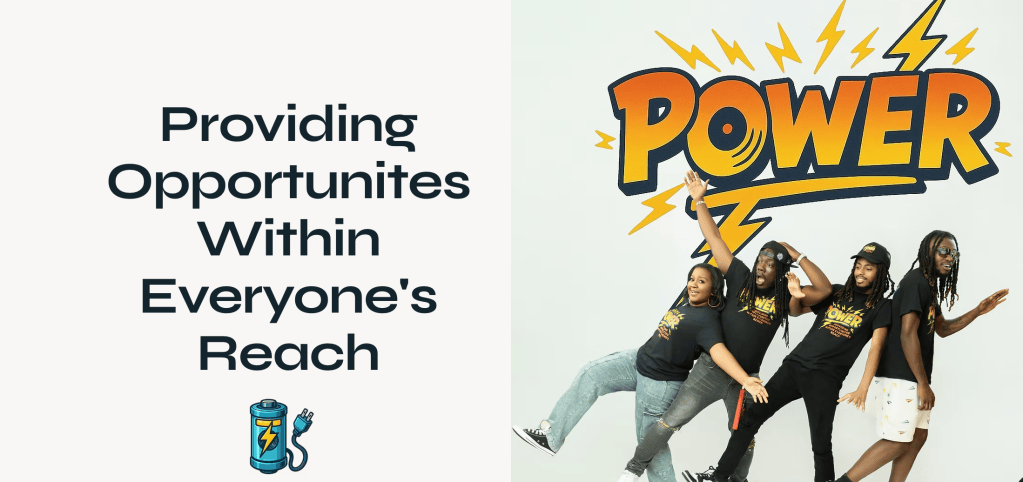
In mid-July, I attended a small anime convention called South Carolina Anime Fest 2026. One of the organizations highlighted during the convention was P.O.W.E.R.. According to their website, datspower.org, “P.O.W.E.R is committed to fueling confidence, joy, and self-expression through music, dance, and culture. Our mission is to help individuals step outside their comfort zones by providing fun, high-energy opportunities to connect and grow.” They are a group who travels to various conventions on the East Coast, primarily, hosting panels and tabling to promote their organization and they described their work as a form of urban therapy, or the idea of meeting people where they are by connecting mental health conversations with culture and music.
Made up mostly of educators, I attended the panel expecting this to be somewhat of a workshop as well as a discussion backed by research regarding mental health. It was not what I expected, but it was interesting.
The structure of the panel was more podcast-like than panel-driven. The team started with introductions, talking about themselves and their organization. Then they asked questions that they answered, much like a podcast, before opening up to the attendees. For example, “Which anime character’s journey or story do you relate to the most?”
My answer was Ren Mihashi from Big Windup! (Ōkiku Furikabutte). Mihashi is an interesting character to bring into a conversation about mental health because his story involves insecurity, anxiety, self-doubt, and the difficulty of learning to trust himself and the people around him after experiencing years of bullying (which, having survived bullying myself–I connected with a lot regarding his story).
I think having this kind of brief, but open, communication with the crowd was really good. It showed how effective media, and–in this case–anime can be as an effective starting point for these conversations. Sometimes it is easier to talk about what a fictional character is experiencing before talking about ourselves giving viewers a safe degree of distance.
The rest of the panel followed a pretty standard chain of Q&A with prompted questions and served as a nice little break for someone like me with not much to do between my own presentation times. I don’t think I walked away learning anything but it did give me some ideas to consider as we’ve been on hiatus for the last two months and just returned as of this month (September 2026).
As anime has become increasingly mainstream here in the United States, we’re also seeing more conversations about the complexity of its characters. Mental health, and mental health struggles, aren’t necessarily treated as a single defining characteristic anymore in media. Older works can sometimes rely on stereotypes when depicting mental illness or psychological struggles, using them as shorthand for a character being “unstable,” dangerous, tragic, or simply quirky. Things are becoming more nuanced, though—not perfectly, and certainly not across the board, but there is a noticeable shift toward allowing characters to have more complicated relationships with their own mental health and topics like abuse, trauma, or neglect.
I think that’s where a panel like this can be useful or would have been with more depth and research though that was not the focus of this particular panel (it more heavily worked as group-work which is fine).
What I took away from the panel was how the speakers used these generalized questions to open the doors for discussions on mental health. Not, of course, as a substitute for professional mental-health care but a way to break some of the barriers in starting that conversation.
The panel created a low-pressure environment where people could talk about mental health through something they already cared about: anime, gaming, content creation, and fandom. For a convention audience, particularly a small convention audience like this one, that might be more valuable than a formal lecture on the topic of how anime can open those doors because its showing it.
As someone coming back from a hiatus that was caused from feeling burn out and needing some time to grieve, that was a nice little inspiration kick as I got reminded of why I like blogging and writing about anime/manga/so on in the first place. It’s a place I feel like I can connect with the world in a small way as my world has grown.
So, yeah… cool little panel! With that said, below is a copy of my notes. If interested, please feel free to read the questions and my answers. And, if you want–maybe answer one or more yourself in the comments!
NOTES:
Power datspower.org.
- Providing
- Opportunities
- Within
- Everyone’s
- Read
Urban therapy where therapy meets culture and music
Many anime protagonists struggle with loss, trauma, or identity. Which anime character’s journey or story do you relate to the most?
- Ren Mihashi “The Big Windup”
Some anime dive into darker mental health themes. Do you think these stories help shine a light on mental health struggles, or can they reinforce stereotypes?
- I think it can be both. Older anime, but not exclusively older, tends to have more stereotypes but there is more and more diversity in depictions as time goes on and I think that is really important.
Video games can both relieve stress and cause it. How do you personally balance gaming as a coping tool versus a potential stressor?
As content creators, there’s pressure to always be “on.” How do you protect your mental health while still showing up for your audience? Streaming and creating content can be exhausting. What practices help you recharge and avoid burnout?
- Panelist Quote: “You don’t have to give yourself to the world.”
Many fans look up to content creators as role models. Has there been unhealthy Fandom? & How do you balance authenticity with boundaries around your personal struggle?
In your experience, how does sharing fandom culture–cosplay, conventions, panels like this- strengthen mental health through belonging?
Discover more from The Anime View
Subscribe to get the latest posts sent to your email.
