
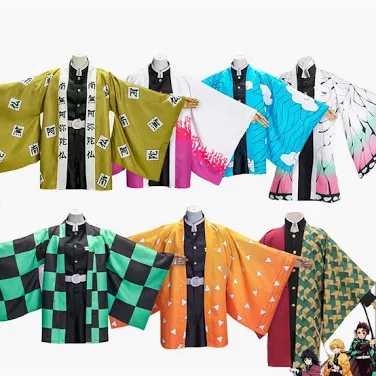
One of the most fascinating convention panels I attended explored the symbolism of Japanese textiles and clothing traditions reflected in Demon Slayer: Kimetsu no Yaiba at Anime Expo a few years ago. What initially looks like aesthetic costume design often carries layers of meaning through pattern, fabric, color, and historical association.
The panel examined how kimono traditions, motifs, and textile language can deepen our understanding of character design—not only in Demon Slayer, but in Japanese visual culture more broadly. Here are a copy of the notes from that panel:
Clothing Has Meaning and Spirit
A recurring theme throughout the panel was the cultural relationship between clothing and material objects.
Traditional Japanese thought often emphasizes that objects possess value, memory, and spirit, making reuse and proper care important. Clothing, therefore, is not always treated as disposable. Garments are expected to fit appropriately, be maintained, reused, and passed down.
This context helps explain the attention historically given to kimono construction and textile choices.The kimono itself is made meaningful not only by fabric and pattern, but by accessories and styling choices. For example:
The “obi” (the sash tied around a kimono) carries social and formal significance. More formal kimono often use more elaborate obi arrangements. Sleeve length and cut can also indicate status or life stage.
One detail mentioned during the panel: longer sleeves traditionally signaled unmarried women, a feature still visible in formal garments such as “furisode.”
Reading Patterns: Flowers, Animals, and Geometry
Many traditional motifs appearing in kimono designs carry symbolic associations.
1. Chrysanthemums (Kiku) – The kiku (chrysanthemum) originated in China but became deeply embedded in Japanese culture. The panel compared its adoption to the cultural role roses play in the United States: imported, but ultimately naturalized into local symbolism of love or affection.
Chrysanthemums often symbolize:
- Longevity
- Nobility
- Autumn
- Imperial imagery
2. Cranes (Tsuru) – The tsuru (crane) remains one of Japan’s most recognizable motifs.
Cranes are commonly associated with:
- Longevity
- Good fortune
- Happiness
- Auspicious events
3. Hemp Pattern (Asanoha) – One of the most recognizable motifs for anime fans is the asanoha pattern—the geometric hemp-leaf design famously associated with Nezuko.
Traditionally, hemp grows quickly and strongly, so the motif became associated with wishes for healthy growth and strength in children. Its use extends far beyond anime and appears throughout historical textiles.
4. Arrow Feathers (Yagasuri) – The yagasuri pattern references arrows and archery.
Historically, arrows shot in battle could not be retrieved once released, leading the motif to symbolize determination and moving forward.
5. Shōchikubai – The phrase “shōchikubai” (pine, bamboo, and plum) was mentioned as a traditional trio representing perseverance, resilience, and renewal.
Pattern as Social Language
Historically, a person’s clothing could communicate:
- Season
- Time of year
- Day versus evening wear
- Social status
- Formality
- Age or marital status
The panel noted that seasonal awareness was especially important. A woman’s kimono pattern could shift according to monthly seasonal changes, creating visual cues tied to nature and the calendar. Motifs all communicated timing and context.
Dyeing and Textile Techniques
The panel also highlighted “shibori,” a resist-dye technique often compared to tie-dye. Shibori works by binding or tying sections of cloth, dipping the fabric into dye, and revealing patterned areas after removal
Unlike many modern tie-dye associations, historical shibori could become highly intricate and sophisticated.
Another motif discussed was “ichimatsu,” the checkerboard pattern recognizable to many Demon Slayer viewers through Tanjiro’s haori design. The pattern predates the series by centuries and has long existed within Japanese textile traditions.
Fabric, Modernization, and Changing Attitudes
The panel also touched on changing materials and postwar textile shifts. During wartime and afterward, mixed fabrics such as silk-cotton combinations became more common and practical.
One example mentioned was “sensu” textiles combining silk and cotton, though these materials were sometimes viewed as lower status or “cheap” compared with pure silk.Similarly, “four-season patterns” gained popularity because they made kimono more wearable year-round rather than season-specific.
Yet despite modernization, attitudes toward fabric remained strong. For example, the reluctance to wear cotton remains deeply embedded in some kimono traditions, reflecting historical ideas about quality, formality, and craftsmanship.
Why This Matters for Anime Costuming
Anime costuming is often treated as purely visual design for many viewers. However, series such as Demon Slayer draw from centuries of textile symbolism that are culturally interesting and help keep this history alive.
The result is, if you learn more about the patterns and designs, that these costumes can communicate a lot about the characters before they ever speak. For viewers, understanding textile symbolism adds another layer to the series—and for cosplayers and costume historians, it opens an entirely new way to read anime.
Discover more from The Anime View
Subscribe to get the latest posts sent to your email.
