
Recently, I listened to Issue #1 of Unseen, a series advertised as an audio comic. It’s essentially a comic book that exists entirely through sound. The story itself is quite good, and I would recommend it to anyone interested in assassin stories, but as I listened, I couldn’t quite convince myself that I was experiencing a comic.
My brain kept categorizing it as an audiobook or perhaps an audio drama. There were characters, dialogue, narration, and sound effects, but I never felt like I was reading a comic. The visual language I associate with comics—the panels, page layouts, gutters, and deliberate composition—was absent.
It left me wondering: Can comics truly be accessible to blind readers without losing what makes them comics in the first place?
Story-wise, the answer is absolutely yes. I’ve developed an entire literature course around that concept. However, could the medium itself be translated into an audio experience that still feels like reading a comic? That’s something I was still a bit stuck on.
I started thinking about comic scripts. I’ve read scripts for comics before, and somehow, those still feel connected to the comic form. Even without artwork, I find myself mentally reconstructing panels, layouts, and page turns. A script exists as the blueprint for what I know is a comic, essentially, and uses that visual language . However, wouldn’t that logic also apply to a screenplay for a film or a script for a television episode? I mean, a “page” and a “scene” can have overlap. While instinctively I’d say these are not the same, just as a screenplay isn’t a movie… that also means that a comic script and the comic itself aren’t the same either. One is clearly a production document.
Still, a script felt close to a comic than listening to Unseen did and I kept wonder why. Perhaps it’s because I’m bringing my own prior knowledge to the experience. I’m filling in the visual gaps because I already know what comics look like and how they communicate. The script isn’t functioning as the comic itself so much as reminding me of one. An audio comic, on the other hand, asks me to experience the story through a different language, one I see used much more often in audio dramas and audiobooks. Instead of panels and page composition, it relies on pacing, voice acting, music, and sound design—the same tools used by said audio dramas and audiobooks.
At present, I can’t help feeling that Unseen is closer to an audio drama or audiobook than a comic… So then, at what point does changing the language of a medium transform it into an entirely different medium?
While that kept circling in my mind over the last few months, I began drafting this post. At the time of writing the above, I really didn’t have an answer to my questions. I mean, can comics truly be accessible to blind readers without losing what makes them comics in the first place? Could the medium itself be translated into an audio experience that still feels like reading a comic? At what point does changing the language of a medium transform it into an entirely different medium?
Well, there may be an (imperfect) answer to these concerns: Manhwa Recap Videos
(Author note: as a shorthand, I’m going to put all of these terms under the “Manhwa Recap” umbrella term, so bear with me because they obviously cover manhwa, manga, and manhua and other comic media.)
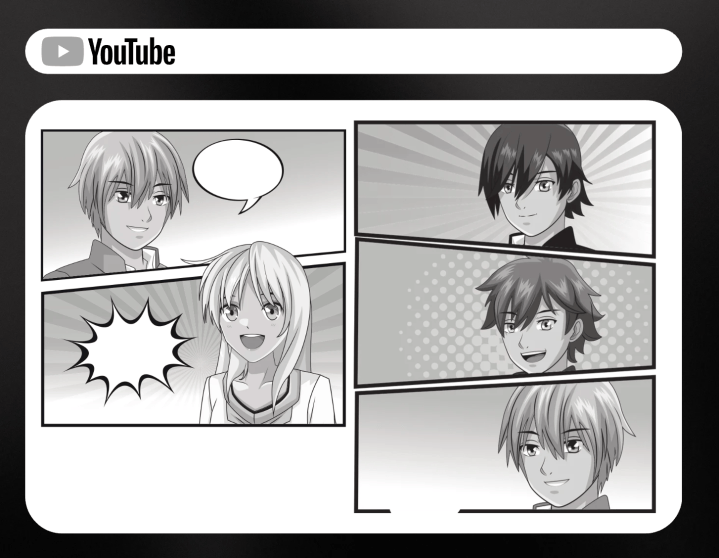
If you’ve spent any time on YouTube lately as an avid manhwa reader, you may have noticed a growing number of channels dedicated to recapping manhwa, manga, and manhua. These videos often take existing comics—frequently Korean works and lesser-known manga or manhua—and retell their stories through narration. Often times under lengthy titles that bear little resemblance to the original.
The videos are accompanied by generous amounts of artwork and panels taken directly from the source material. Some cover entire story arcs, while others condense dozens, or even hundreds, of chapters into a single video that can run an hour or longer.
Many of these videos are attached to channels that have accumulated thousands of subscribers, with individual videos attracting substantial viewership. There’s clearly an audience for this kind of content, and after spending time watching several recaps in preparation for this article, I can’t exactly say I dislike the concept.
I have a history with recap content. When I was younger, I occasionally watched anime recaps of series I simply couldn’t bring myself to sit through in their entirety. Naruto and Bleach come to mind. I was interested in their overarching stories, but committing to watching all the episodes—particularly when accounting for filler—wasn’t always appealing.
I did something similar with literature. As a literature major, I was often reading six or more novels a week for seven weeks leading up to a midterm essay or exam. Sometimes, reading a summary or watching a study guide video was a much more practical way to refresh my memory than attempting to reread everything immediately before the test.
Recaps offer a convenient alternative as they allow audiences to keep up with major developments without committing quite so much time to the original material and these manhwa recaps seem to serve a similar purpose, although their format raises some significant concerns.
Many feature extensive sequences of panels taken directly from the original comic—sometimes seemingly reproducing nearly the entire work. The narration follows the story chapter by chapter, while the accompanying visuals recreate much of the experience of reading the original and that leads to a legitimate question about copyright infringement.
These works are copyrighted, and adding narration, editing panels together, or summarizing a story does not automatically make their use permissible. There’s a difference between discussing a comic and providing an alternative way to experience it without payment, and I think some of these recaps cross that line.
Yet, despite the legal concerns I have for the works, the biggest thing that stood out to me while listening and watching these videos was how much they felt like reading a comic.
While the videos don’t necessarily use the terminology to describe panel to panel retelling, many follow the comic panel by panel, narrating what happens in each image. Sometimes the narration includes the dialogue; other times, it describes characters’ emotions, actions, or the images themselves.
That step-by-step retelling is much more comic-like, even though we don’t have the experience of turning the page or seeing said panels (if you are just listening to them).
It’s not a perfect medium. It is clear that most of these videos are using AI in some form (if not most parts) of the production–scripting, voicing, possibly in other ways too. While watching several videos, I noticed that the narration didn’t always accurately reflect the original material. Character details were occasionally misrepresented, events were simplified, and certain plot points seemed to be altered or misunderstood. Many lacked captions or other accommodations, including detailed visual descriptions, that would make them more widely accessible. Some errors were relatively minor, while others changed the context of what was happening. Still, despite these shortcomings, I can see how some of these videos make stories more approachable for audiences who might otherwise struggle to engage with them. Moreover, the format points toward possibilities worth exploring.
Imagine official manhwa releases offering narrated editions through accessible story summaries and audio-supported reading experiences. These options could expand readership without requiring audiences to rely on unofficial channels and these videos demonstrate that there is an audience for narrated versions of comic storytelling that official publishers and digital comic platforms haven’t adequately addressed yet.
After exploring these videos, I do feel like comics can be accessible without losing what makes them comics. Maybe not all of them yet, but certainly it seems that these recaps offer an audio experience that still feels like reading a comic despite changing the distribution medium from print to video.
As such, I find myself in a somewhat complicated position. I’ve watched enough to recognize their appeal, so I don’t hate them. Still, it is difficult for me to fully support their endeavours when they seem to be stealing from the creators that made them.
I feel like there is a lot of potential here for accessibility and for expanding the ways we experience/engage with comics. I just wish they were accessible in a more legal capacity.
Discover more from The Anime View
Subscribe to get the latest posts sent to your email.
